
A local trades firm, a Māori-owned food producer and a software company selling overseas may all be successful New Zealand businesses. A startup has a different task: finding a repeatable business model with room to grow quickly. That distinction changes the ownership structure, the money needed and the evidence founders must produce.
Stats NZ counted 620,150 economically significant enterprises at February 2026; around 74% had no paid employees. A different measure identified 24,012 tech firms in 2024. Neither is a startup count. The first spans the wider economy; the second includes established technology companies.
Company, small business, startup or scale-up?
A company is a legal entity with its own ownership and governance arrangements. A startup is a stage of business development, when founders are still testing a model designed to grow quickly and repeatedly. Startups often incorporate, but incorporation alone says nothing about growth potential. A scale-up has already shown that customers want what it sells and is expanding sales and delivery. A long-running company can remain a small business by choice.
| Business type | Main economic question | Suitable growth approach |
|---|---|---|
| Local or lifestyle business | Can revenue cover wages, costs and the owner's income? | Customer cash flow, savings or borrowing |
| Export-oriented SME | Can the product compete profitably in chosen overseas markets? | Operating profits, trade finance, partnerships or growth equity |
| Early-stage startup | Will a distinct solution win a repeatable market? | Bootstrapping, angel investment, pre-seed or seed funding |
| Scale-up | Can sales and delivery expand without costs rising at the same rate? | Reinvestment, venture capital, strategic capital or debt where appropriate |
A profitable family business may fund its next hire from retained earnings rather than give away equity. A software company racing to establish itself in several markets faces different costs and risks. Venture capital suits the latter much more often than the former; neither route is inherently better for Aotearoa's economy.
Startup investment in New Zealand, 2025–2026
New Zealand Growth Capital Partners (NZGCP) recorded NZ$775.7 million invested across 68 startup deals in the first half of 2026, according to its Young Company Finance Spring 2026 report. Capital invested was up 114.5% against the same period in 2025, although deal numbers were down 6.8%. The 2025 full-year total was NZ$754 million from 166 deals in that reporting series.
Early-expansion and expansion companies took 87% of investment capital in the first half of 2026; proof-of-concept businesses made up 28% of deals. There were 25 new deals, up from 16 in the first half of 2025. Across all stages, the median round was about NZ$1 million against an average of NZ$11.1 million. For a new company's first round, the median was nearer NZ$500,000. A founder planning a first raise would be misled by the average alone.
Dealroom's 2026 New Zealand Tech Ecosystem report estimates the combined enterprise value of New Zealand's venture-backed tech ecosystem at roughly NZ$133 billion. Enterprise value is not funding raised or annual GDP. Dealroom and NZGCP also apply different inclusion rules; their figures should not be combined as though they measure the same thing.
Industries shaping New Zealand startups
Agritech and food technology
Farms, orchards and food processors give agritech founders demanding customers close to home. Halter uses connected collars, virtual fencing and pasture-management software in livestock farming. Larger businesses such as Fonterra and Zespri create opportunities along their supply chains for traceability, automation, water management, animal-welfare and productivity tools. A farm trial must account for installation, servicing, seasonal conditions and the customer's actual savings.
Software, SaaS and financial technology
Founded in 2006, Xero grew from New Zealand into an international cloud-accounting business listed on the ASX. Sharesies serves retail investors and business clients through investing and other wealth services. For newer SaaS and fintech firms, a good pilot is only a start. Buyers will ask whether the software works with existing systems, saves money, retains users and meets data-security and regulatory requirements.
Deep tech, space and advanced manufacturing
Rocket Lab began in New Zealand and is now a Nasdaq-listed space business headquartered in California. Dawn Aerospace works on satellite propulsion and a reusable spaceplane, with operations in Christchurch and overseas. Outset Ventures is part of the deep-tech ecosystem associated with Rocket Lab, LanzaTech and Mint Innovation. Such ventures must fund long testing cycles, recruit specialist engineers and clear technical or certification hurdles. A working prototype is not proof of a paying market.
Healthtech, climate solutions and business services
Fisher & Paykel Healthcare is an established medical-technology exporter, not a startup. New healthtech firms developing devices, diagnostics or biotechnology have to meet safety and regulatory requirements before scaling. Climate-tech and circular-economy businesses face a second test: customers must be able to afford and deploy the claimed environmental improvement. Logistics, services and manufacturing companies can improve productivity without needing venture investment.
New Zealand companies at different stages
Halter and Christchurch-connected Partly, a supplier of automotive-parts data infrastructure, tackle specific industry problems with international markets in mind. Dawn Aerospace takes an engineering-led route. Xero and Rocket Lab have grown beyond the early-startup stage. Fonterra, Mainfreight and Fisher & Paykel Healthcare are established companies whose performance rests on long-term operations and governance rather than startup milestones.
Where New Zealand startups are based
Auckland has the country's largest concentration of venture investors, large customers and startup networks. NZGCP's first-half 2026 figures place 85% of deals and 98% of capital in Auckland, Wellington and Canterbury combined. These are investment figures, not a judgement on the prospects of businesses based elsewhere.
Wellington brings together government buyers, professional services, fintech and digital products; Creative HQ and local angels support founders. Christchurch and Canterbury have engineering, aerospace, agritech and software businesses, alongside Ministry of Awesome. Waikato and the Bay of Plenty are close to farming and food production. Otago, Dunedin, Northland and Southland draw on different universities and regional industries. Being near a pilot customer or specialist facility can matter more than sharing a postcode with an investor.
Setting up a business: the New Zealand requirements
The usual choices are sole trader, partnership and company. A sole trader has relatively simple administration but remains personally responsible for business liabilities. Partners need to agree on decision-making, income and responsibility for debts. A limited liability company has its own legal identity and can issue shares to founders and investors. Directors still have statutory duties, and personal guarantees or misconduct can leave individuals exposed.
The Companies Office handles incorporation. Founders reserve a name, provide director and shareholder information, obtain the necessary consents and specify a registered office. The business receives a New Zealand Business Number (NZBN) and needs an IRD number for tax. At least one director must live in New Zealand, or live in Australia and also direct an Australian-incorporated company. Companies must file annual returns and keep their register details up to date.
For most taxable activities, GST registration is required once turnover reaches, or is expected to reach, NZ$60,000 in a 12-month period. Charging GST also triggers registration. A company name is not a trade mark: the Companies Register, patents and trade marks serve different purposes. IPONZ and ONECheck help identify competing rights. Publicly revealing an invention before filing can undermine patent protection, making early IP ownership agreements especially important for technical startups.
Employing staff brings payroll administration, employment agreements, tax duties and workplace health-and-safety obligations. Customer data needs protection too. Registering a business establishes its legal footing; it does not establish that customers will buy the product.
Testing whether customers will pay
Start with a specific customer problem. Who pays for the solution? Who approves the purchase, what do they use now, and how costly is the problem? A minimum viable product (MVP) should test the riskiest assumption before founders commit to building everything. Interest in a demo is useful feedback, but it is not the same as willingness to pay.
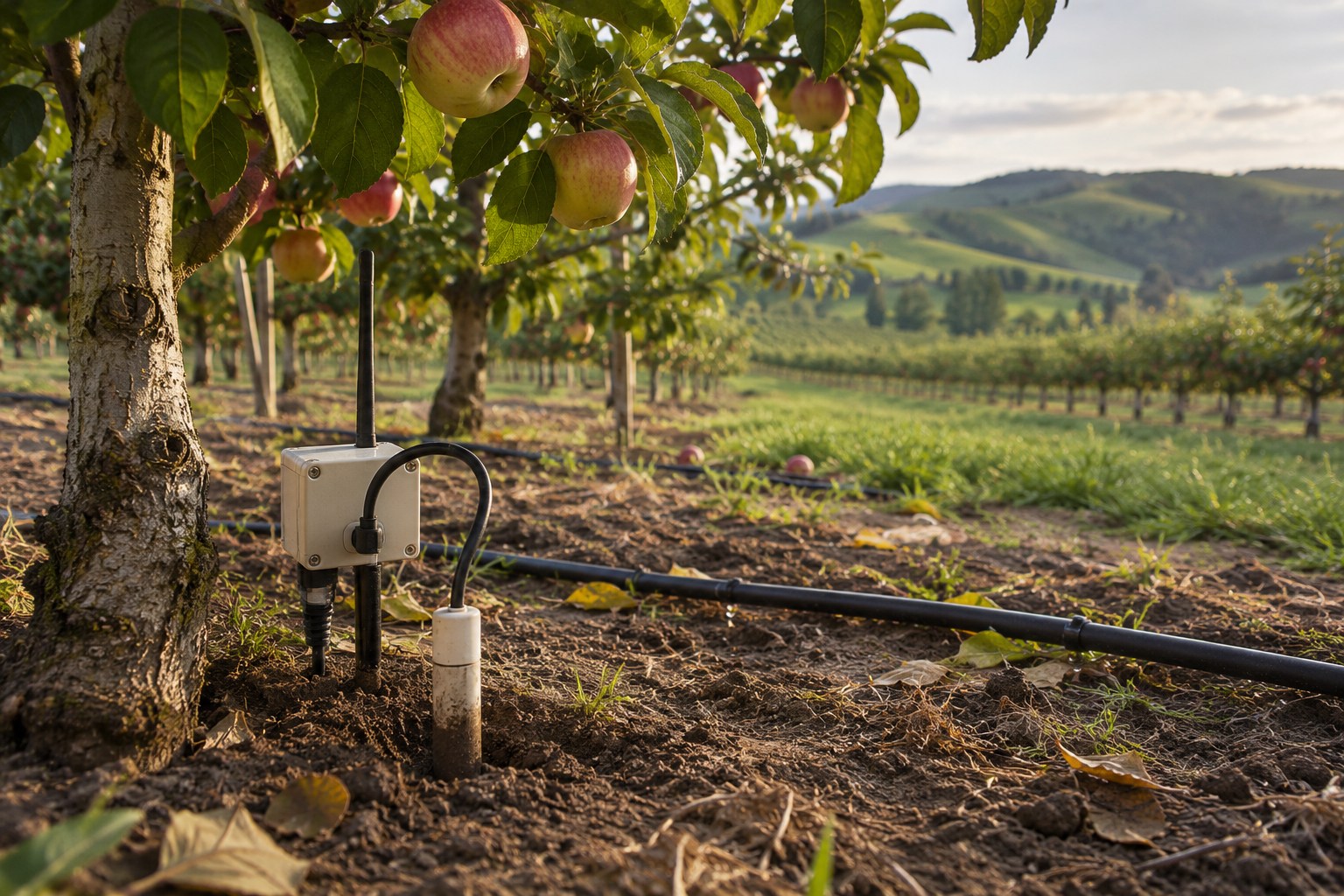
For SaaS businesses, paid conversion, repeat use, retention, gross margin and customer-acquisition cost help distinguish demand from curiosity. Agritech and manufacturing require field performance, installation costs, reliability, servicing and measurable productivity. Healthtech adds safety checks and regulatory milestones. A successful pilot proves a test worked. Repeat orders or a signed deployment contract say more about whether the customer will keep paying.
Founders need to track cash runway, working capital and unit economics alongside sales growth. Selling overseas broadens the market but adds receivables, customer-support hours and compliance costs. A fast-growing company can still run short of cash if its margins are thin or customers pay late.
Startup funding: matching capital to the milestone
Bootstrapping protects ownership and puts customer revenue at the centre of the business. Bank loans work better when cash flow and assets support repayments; they rarely replace risk capital for an unproven product. Angel investors often back proof-of-concept and seed-stage teams. Venture capital looks for unusually large growth opportunities. By Series A or Series B, investors expect stronger commercial evidence, financial controls and governance.
NZGCP supports two different parts of the market. The Aspire NZ Seed Fund invests directly in early technology ventures alongside private investors. The Elevate NZ Venture Fund backs venture-capital funds that invest in growing companies, including those seeking Series A and B finance. Icehouse Ventures, Blackbird Ventures, GD1, Movac, Outset Ventures and Punakaiki Fund also operate in the ecosystem, each with its own investment mandate.
A funding round can change control of a company even when its valuation looks attractive. A cap table shows ownership, while vesting, shareholder agreements, liquidation preferences, board seats and follow-on rights shape control and dilution. Convertible notes and SAFE-style agreements can delay pricing the shares, not eliminate the economic trade-offs. The term sheet deserves the same scrutiny as the investor's credentials.
New Zealand's Research and Development Tax Incentive offers a 15% credit on eligible R&D spending, generally with a minimum of NZ$50,000 in qualifying annual expenditure unless an approved research provider is involved. The work must address qualifying scientific or technological uncertainty; routine product improvements do not automatically qualify. Funding arrangements administered by MBIE are also changing as Callaghan Innovation functions transfer, so older grant descriptions may no longer reflect current eligibility.
Founder support, accelerators and local networks
The Founder & Startup Support Programme introduced a refreshed provider network from July 2026. Startup Aotearoa is delivered by Ministry of Awesome and Creative HQ. Other recognised providers include Auckland Council, Sprout Agritech, The Factory, Ocean Impact Organisation and Tapuwae Roa, which runs the Māori-focused Tupu Accelerator.
Regional organisations such as Soda Inc, COIN South, Startup Dunedin, Northland Inc and Venture Taranaki connect founders with advisers and local industry. The best accelerator for a venture is not necessarily the most prominent one. Relevant mentors, pilot customers, technical facilities and appropriate investors matter more than pitch-deck coaching alone. Paying customers and technical milestones are more telling results than event attendance.
Planning for overseas customers
A New Zealand company can thrive locally, but many technology startups need overseas buyers to reach venture-scale revenue. New Zealand Trade and Enterprise (NZTE) offers guidance on market choice, pricing, distribution and overseas operations. Australia, North America, Europe and Asia bring different purchasing processes, technical requirements, support hours and currency risks.
An export plan needs a defined buyer, a practical route to that buyer and a clear understanding of local standards. Software vendors face data and procurement rules. Food and manufactured products bring freight, customs, labelling and destination-market obligations. IP protection is territorial: a New Zealand trade mark does not cover every export market. A distribution agreement may look profitable until freight, returns, commissions and after-sales support are counted.
Checking a New Zealand company before a deal
What needs checking depends on the relationship. Customers need dependable delivery and support. Employees should understand pay, cash runway and the value of share options. Suppliers face payment and credit risk. Investors need evidence of customers, margins, governance and the company's next financing requirements.
- Identity and control: search the Companies Register by name, company number or NZBN; check incorporation status, directors, shareholders and filing history.
- Commercial traction: distinguish signed revenue from pilots, forecasts and expressions of interest; check concentration in a few customers.
- Financial resilience: review cash runway, gross margin, working capital, debt obligations and the timing of the next funding round.
- Ownership and compliance: verify founder equity, IP assignments, trade marks, licences, privacy arrangements and contracts material to delivery.
- Execution: test whether the team can recruit, manufacture, support and sell at the scale promised.
A valuation reflects a negotiated view of future prospects; it is not an audited measure of present performance. Accelerator membership or a well-known investor can be relevant background, but neither guarantees solvency or a suitable product.
Common questions about New Zealand startups
Does every New Zealand startup need venture capital?
No. Revenue-funded software businesses, professional services and local firms can expand without selling shares. Venture capital makes more sense for a company chasing a large market with high execution risk and credible prospects of rapid growth.
Is registering a company the same as launching a startup?
No. Incorporation creates a legal entity. A startup still has to find customers, set prices, deliver a product and prove demand. Some registered companies remain dormant; others operate successfully without adopting a startup growth model.
Can an overseas founder use the old Entrepreneur Work Visa to launch a startup?
The Entrepreneur Work Visa is closed to new applications. The Business Investor Work Visa concerns investment in qualifying established businesses and carries substantial investment and operating requirements. Registering a company gives an overseas founder no automatic right to work or live in New Zealand.
What separates a promising startup from an investable one?
A promising idea solves a genuine problem. An investable venture can also show paying demand, credible unit economics, a team able to deliver, achievable milestones and an ownership structure that can accommodate new investors. Later rounds call for more robust evidence than seed funding.