
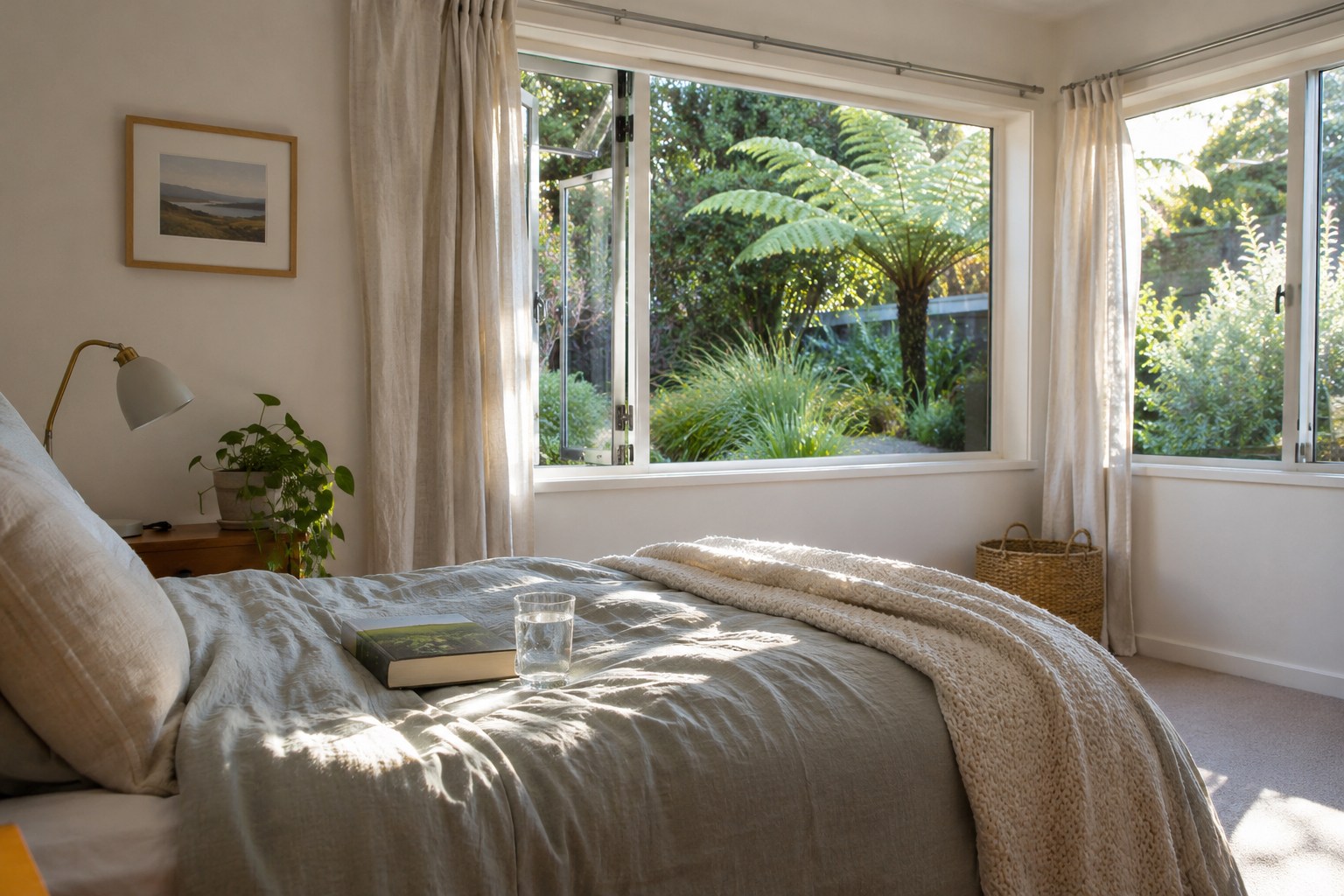
Wellness is how you look after your physical and mental health, relationships and sense of purpose day to day. It isn't a perfect diet or an expensive self-care routine. In Aotearoa New Zealand, hauora links health with the body, mind, whānau, identity and the places where we live. Any routine has to work within real limits on time, money and energy. If you're exhausted, another fitness target probably isn't the first priority. Poor sleep needs attention; so does feeling cut off from other people. Start with the part of life that's hardest right now and make one change you can keep.
What is wellness, and how is it different from wellbeing?
People use wellness and wellbeing interchangeably, but there's a useful distinction. Wellness concerns the habits and conditions that support health. Wellbeing is how you feel and function: whether you have energy, safety, belonging and room to take part in life.
A chronic condition, disability, anxiety or depression does not rule out wellbeing. Healthcare, stable housing, income, cultural connection and a supportive workplace shape it too. You can care for yourself and still need better support or circumstances. Health isn't simply a test of willpower.
Hauora and Te Whare Tapa Whā: a New Zealand view of health
In the Māori model Te Whare Tapa Whā, developed by Sir Mason Durie, health is pictured as a wharenui (meeting house). Its four walls stand on a foundation of whenua: land and belonging.
- Taha tinana — physical wellbeing: caring for the body through movement, sleep, nutrition, recovery and healthcare.
- Taha hinengaro — mental and emotional wellbeing: recognising feelings, managing stress, thinking clearly and finding support during difficult periods.
- Taha whānau — family and social wellbeing: sustaining relationships with family, friends, colleagues, chosen whānau and community.
- Taha wairua — spiritual wellbeing: meaning, values, identity, faith or a sense of connection beyond everyday tasks.
The walls support one another. A demanding shift can disrupt sleep and time with whānau; a supportive community can make meals and movement easier. Te Whare Tapa Whā is a Māori health framework, not a checklist of self-care activities. It keeps attention on connection to place, heritage and the people around you.
The everyday foundations of wellness
Move in ways your body can sustain
You don't need a gym membership to be active. Walking, cycling, swimming, gardening, dancing, tramping and waka ama all count. New Zealand adult guidance recommends at least 150 minutes of moderate activity or 75 minutes of vigorous activity each week, with muscle-strengthening activity on at least two days. Moderate activity makes you breathe harder, but you can still talk. Health New Zealand | Te Whatu Ora also recommends breaking up long periods of sitting.
Those are targets to build towards, not a starting line. A ten-minute walk after lunch or a short ride to the shops makes a sensible beginning. After an injury, or with a long-term condition, a GP or physiotherapist can help establish suitable activity. Choose something accessible enough to repeat.
Eat for nourishment, not a reset
Meals with vegetables, fruit, whole grains, beans or lentils, nuts, seeds and protein are easier to sustain than a restrictive diet. Fish, eggs, dairy and plant proteins suit different dietary needs. Olive or canola oil, avocado and nuts provide unsaturated fats; water works as an everyday drink.
New Zealand's eating-well guidance recommends at least five servings of vegetables and two of fruit a day. Frozen vegetables, seasonal produce and canned legumes can help manage costs; oats and whole grains provide fibre. Fermented foods such as plain yoghurt are optional. Allergies, medical conditions and other dietary needs call for advice suited to the person.
Protect sleep and recovery
Most adults aged 18–64 need roughly seven to nine hours of sleep in a 24-hour period. A regular wake-up time, a comfortable room and a quieter evening can support the sleep–wake rhythm. Less late caffeine and fewer work messages often help more than another sleep gadget. Health New Zealand's sleep information covers insomnia, sleep apnoea and shift-work disruption.
Shift workers and parents caring for babies can't always control their sleep schedule. Rest often has to fit around work and caregiving. Ongoing sleep problems, loud snoring with breathing pauses or severe daytime sleepiness warrant a healthcare assessment, not another bedtime hack.
Look after mental health, relationships and purpose
Slow breathing, mindfulness and journalling can provide a pause when stress rises. They can't fix an unreasonable workload or financial pressure. Work–life boundaries, support from trusted people and professional care may be needed as well. The Mental Health Foundation's Five Ways to Wellbeing names five directions: Connect, Be Active, Take Notice, Keep Learning and Give. A shared meal with whānau, learning te reo Māori, helping a neighbour or noticing the seasons can serve more than one. For some people, whakapapa, spiritual practice and time in nature are central to feeling grounded.
Plenty of contacts can still leave you feeling lonely. One dependable friendship, a sports club, volunteering or a community group may offer a stronger sense of belonging. Quiet time counts too; the right balance of company and solitude isn't identical for everyone.
Enjoy the outdoors without overlooking sun safety
New Zealand's beaches, parks and bush tracks offer plenty of ways to spend time outside. Nature can make movement more appealing, but sun protection belongs in the plan. When the UV Index reaches 3, SunSmart advises protective clothing, shade, sunscreen, a hat and sunglasses. Clouds and cool temperatures don't reliably signal low UV.

How to build a wellness routine that fits real life
A workable routine starts with a constraint: time, energy, money, mobility or something else that shapes the day.
- Identify the pressure point. Fatigue calls for a look at sleep, meals, workload and symptoms. If life feels lonely, relationships may need attention.
- Attach one change to a familiar moment. Walk after the school drop-off, set a bedtime reminder or arrange a weekly catch-up with a friend.
- Review it after two weeks. Has energy, mood, sleep or connection changed? Keep what helps and rethink what adds strain.
A gym membership won't help if transport or childcare keeps you from going. Home-based strength exercise, local walks and inexpensive staple foods remove some costs, but not every barrier. Chronic pain, disability, caregiving, insecure housing and shift work may call for practical support or a change of circumstances rather than more discipline.
Wellness products: useful tools or expensive promises?
You'll see wellness products promoted for gut health, sleep, immunity and longevity. The labels include probiotics, collagen, magnesium, adaptogens, ashwagandha, NMN, wearable trackers, detox programmes, biohacking and “healthspan”. The claims differ, and an ingredient name alone says little about whether the product works.
Consumer NZ has examined popular supplement claims and found little reliable support for commercial cleansing regimes in its detox investigation. The liver and kidneys already process waste. A supplement may suit a diagnosed deficiency or clinical need, but dose and interactions with medicines matter, particularly during pregnancy.
Before buying, ask what problem the product addresses and whether credible evidence supports that use. Check ingredient doses and possible interactions, then weigh the cost against food, movement, sleep or healthcare. A wearable may help reveal patterns; it cannot diagnose unexplained fatigue.
When lifestyle changes are not enough
Persistent low mood, anxiety, exhaustion, pain, sleep disruption or sudden changes in everyday functioning deserve a conversation with a GP or another qualified health professional. Screening, vaccinations, dental care and checks suited to age and medical history are part of staying well, even if they rarely appear in wellness advertising.
In New Zealand, 1737 provides free mental health support around the clock: call 0800 1737 1737 or text 1737. For immediate danger or a medical emergency, call 111. Professional care belongs in a wellness plan too.
What does a healthier relationship with wellness look like?
Better wellness has ordinary signs: energy for valued activities, steadier sleep, food that nourishes, movement you can sustain, and people or places where you belong. Progress can stall during a hard week. If a routine survives a busy week, it is probably doing its job. A flawless plan that lasts three days isn't much use.