
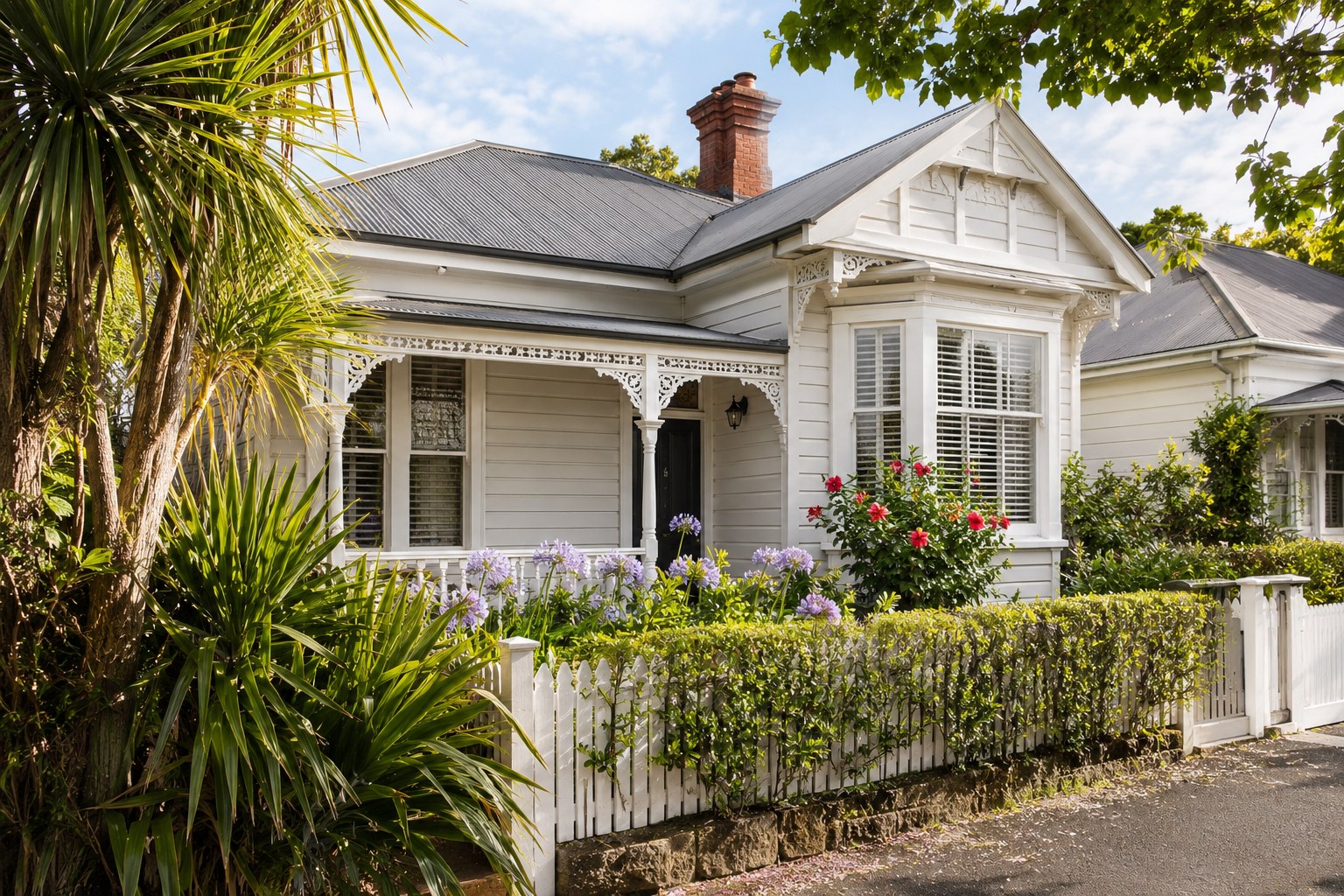
New Zealand real estate spans houses, townhouses, apartments, rental homes, lifestyle blocks, development land and commercial premises, from shops and offices to industrial sites. An advertised price leaves out plenty. A restrictive title, expensive insurance, deferred maintenance or an unsuitable mortgage can outweigh what first looks like a bargain.
What is happening in New Zealand's real estate market?
Property prices are local. Job opportunities, public transport, household growth, new housing, available land and insurance costs shape demand across Auckland, Hamilton, Tauranga, Wellington, Christchurch, Dunedin and Queenstown. Rural and lifestyle properties attract different buyers. For commercial buildings, business demand, lease income and borrowing conditions often matter more than residential price trends.
In October 2026, the Real Estate Institute of New Zealand (REINZ) reported a national median residential sale price of NZ$763,000 across 5,840 sales, with a median 43 days to sell. Its House Price Index (HPI) stood 2.1% below October 2025. Quotable Value (QV) placed the national average home value at NZ$890,508, down 0.9% over the preceding three months. The figures measure different things.
| Measure | Result | What it describes |
|---|---|---|
| REINZ median sale price | NZ$763,000 | The middle price among properties sold during October |
| REINZ median days to sell | 43 days | Market transaction pace, not a promise for any listing |
| REINZ House Price Index | −2.1% year on year | Quality-adjusted movement in sale prices |
| QV average home value | NZ$890,508 | Modelled average value of the housing stock, not a sale-price median |
A median sale price describes homes that actually sold; a quality-adjusted index tracks price movements; QV's average is an estimate for the housing stock. OneRoof's Valocity-based house value index offers another measure. Recent settled sales on nearby streets remain the better check for an individual property.
In October 2026, REINZ recorded year-on-year median price gains in Southland and Canterbury while the national median declined. QV found steeper quarterly weakness across major North Island cities than in much of the South Island. A regional trend says little about the condition, title or price of an individual home.
Stats NZ recorded 41,091 new dwellings consented in the year to September 2026, up 18% year on year. A consent is approval to build, not a completed dwelling. The effect on local housing supply arrives later, shaped by construction completion rates and whether developers are building stand-alone houses, townhouses or apartments.
Finding a property that fits its purpose
Buyers often search Trade Me Property and realestate.co.nz, then cross-check suburb data and sale histories through OneRoof, homes.co.nz or PropertyValue. Filters cover homes for sale or rent, new builds, sections, rural and lifestyle properties, retirement living and commercial space. Listing numbers reflect advertisements; they do not tell you how many transactions settled or what a home is worth.
A stand-alone house usually brings direct responsibility for its land and upkeep. An apartment has shared services and normally a body corporate. Townhouses can sit on separate titles or within a unit-title scheme; the building style alone does not reveal ownership. Buying off the plan adds construction deadlines, specification and developer risk. Lifestyle blocks need closer attention to water, wastewater, fencing, access rights and maintenance.
Ownership type changes the deal
| Title or ownership | Practical consequence |
|---|---|
| Freehold (fee simple) | The land is owned, subject to registered mortgages, easements, covenants and planning controls. |
| Cross-lease | Land is shared under a lease arrangement; a flats plan and the other owners' rights can affect alterations. |
| Unit title | Typically an apartment or townhouse with a body corporate, levies, shared assets and disclosure obligations. |
| Leasehold | Occupation rights attach to a lease of land owned by someone else; ground-rent reviews and remaining lease term matter. |
Even freehold land can have registered restrictions. Toitū Te Whenua Land Information New Zealand (LINZ) holds records of title showing ownership and interests such as mortgages, easements and covenants. A driveway easement or building covenant may change how a section can be used. For a unit title, body corporate minutes, insurance, levies and the long-term maintenance plan deserve the same scrutiny as the apartment itself.
The right location changes with the buyer. An owner-occupier might prioritise school zones, sunlight, accessibility and commute times; a landlord needs achievable rents, vacancy evidence and tenant demand. For businesses, foot traffic or freight access can be decisive. Council rates, infrastructure, zoning and flood or earthquake exposure cut across all three.
Understanding asking prices, valuations and recent sales
An asking price is what a seller seeks, not a valuation. A council capital value (CV), also called a rating valuation (RV), is assessed for rating purposes at a set date. It does not track every renovation or market shift. Automated tools such as HomesEstimate use property and sales data without seeing hidden moisture, roof damage or unconsented alterations. A registered valuer assesses the individual property; an agent's comparative market analysis (CMA) draws on nearby sales.
A useful comparable sale matches suburb, title, section size, dwelling area, age, condition, parking and sale date. A renovated freehold house and a cross-lease home may have similar floor plans but different buyer appeal. Sparse comparable evidence calls for a wider valuation range, not artificial precision.
A national asking-price gap is easy to misread. A realestate.co.nz and REINZ comparison found average asking prices 0.6% above average selling prices nationally for the twelve months to September 2026. Those are separate market averages, not matched sales for individual homes. The figure cannot tell a buyer how far below asking a particular vendor might negotiate.
Recent settled prices, available stock, new listings, auction clearance rates and days to sell are more useful together than any single indicator. A property offered by negotiation, deadline sale or auction is not inherently better value; each method carries different timing and contract implications.
How much does buying a home really cost?
On a NZ$800,000 home, a 20% deposit means NZ$160,000 in buyer equity and a NZ$640,000 mortgage before fees. That arithmetic is not a loan approval. A bank will examine income, debts, spending, credit history, the property offered as security and whether repayments remain affordable if interest rates rise.
The Reserve Bank of New Zealand (RBNZ) restricts bank lending using loan-to-value ratio (LVR) and debt-to-income ratio (DTI) rules. Following changes in December 2025, banks may allocate up to 25% of new owner-occupier lending to borrowers above 80% LVR, and 10% of new investor lending above 70% LVR. These allowances apply to each bank's lending book. They do not guarantee a low-deposit loan. The DTI restrictions permit up to 20% of new owner-occupier lending above six times gross annual income and up to 20% of investor lending above seven times. Existing debts count, and individual banks still apply serviceability tests.
Home-loan pre-approval is conditional. Final lending can hinge on the signed agreement, valuation and acceptable insurance. A fixed mortgage rate holds for its chosen term; floating rates can move sooner. Some borrowers split fixed and floating portions for flexibility. The harder calculation is whether the budget survives a rate reset, lost income or, for an investor, prolonged vacancy.
After at least three years in KiwiSaver, eligible first-home buyers may qualify for a KiwiSaver first-home withdrawal, subject to scheme rules. Participating lenders can offer the Kāinga Ora First Home Loan to eligible applicants with deposits as low as 5%. The First Home Grant closed to new applications in May 2024. Income limits, eligibility rules and bank requirements still apply; a closed grant should not appear in a current deposit budget.
The deposit leaves plenty unpaid: legal or conveyancing fees, a building report, a Land Information Memorandum (LIM), a valuation if required, mortgage charges, insurance, council rates, moving costs, utilities and repairs. Unit titles carry body corporate levies and possible special levies; leasehold property may involve ground rent. Urgent work needed to make a house safe or insurable is a purchase cost, not a discretionary future improvement.
Due diligence: what to check before becoming unconditional
The most expensive problems seldom show up in listing photographs. Unconsented work, leaks, unstable ground, obstructed access, major shared-building repairs or an insurer declining the risk can turn an apparently affordable property into a liability, even after finance has been arranged.
Property records and building condition
- Record of title: confirm the legal owner, boundaries, tenure, registered mortgages, easements, covenants and any unusual restrictions with a lawyer or conveyancer.
- Land Information Memorandum (LIM): order the local council's available information on the site, including planning matters, drainage and recorded hazards. A LIM is not a guarantee that every defect is known.
- Council property file: compare the actual building with available plans, building consents and code compliance certificates (CCCs), particularly after additions or conversions.
- Independent building inspection: assess structure, roof, foundations, moisture, cladding, plumbing, electrical concerns and maintenance. Suspected weathertightness or structural issues justify specialist input.
- Insurance and natural hazards: check cover and premiums early, together with flood, landslide, liquefaction, coastal and earthquake exposure. Previous NHC or EQC claims warrant a review of damage, settlement and completed repairs.
- Unit-title records: review body corporate finances, meeting minutes, insurance, maintenance plans and any proposed remediation or special levies.
Natural Hazards Commission Toka Tū Ake advises buyers to review earlier natural-hazard claims and obtain independent inspections, with specialist advice for high-risk sites. A flood map or council hazard layer indicates exposure; it is not an engineering opinion on one address. Low-lying land can cost more to insure or finance than its tidy building and modest asking price suggest.
A seller's building report is only as useful as its scope and the buyer's right to rely on it. Consumer NZ has examined inconsistency in building-inspection quality. Surveyors, engineers and building inspectors should be appropriately qualified, independently instructed and insured for the particular work.
Contract conditions and the difference between deposits
A sale and purchase agreement may include finance, building-report or LIM conditions with specific deadlines. Once the parties satisfy or waive the relevant conditions, the agreement becomes unconditional. Auctions usually require bidding without those protections, so lending, legal and building checks need attention beforehand. Missing a deadline or failing to settle can have contractual consequences.
The deposit payable under the sale and purchase agreement is not necessarily the full equity contribution required by the lender. The contract sets the due date for that deposit. The rest is payable at settlement. A lawyer or conveyancer should explain the obligations before signing. The Settled.govt.nz explanation of sale and purchase agreements describes the documents, dates and conditions.
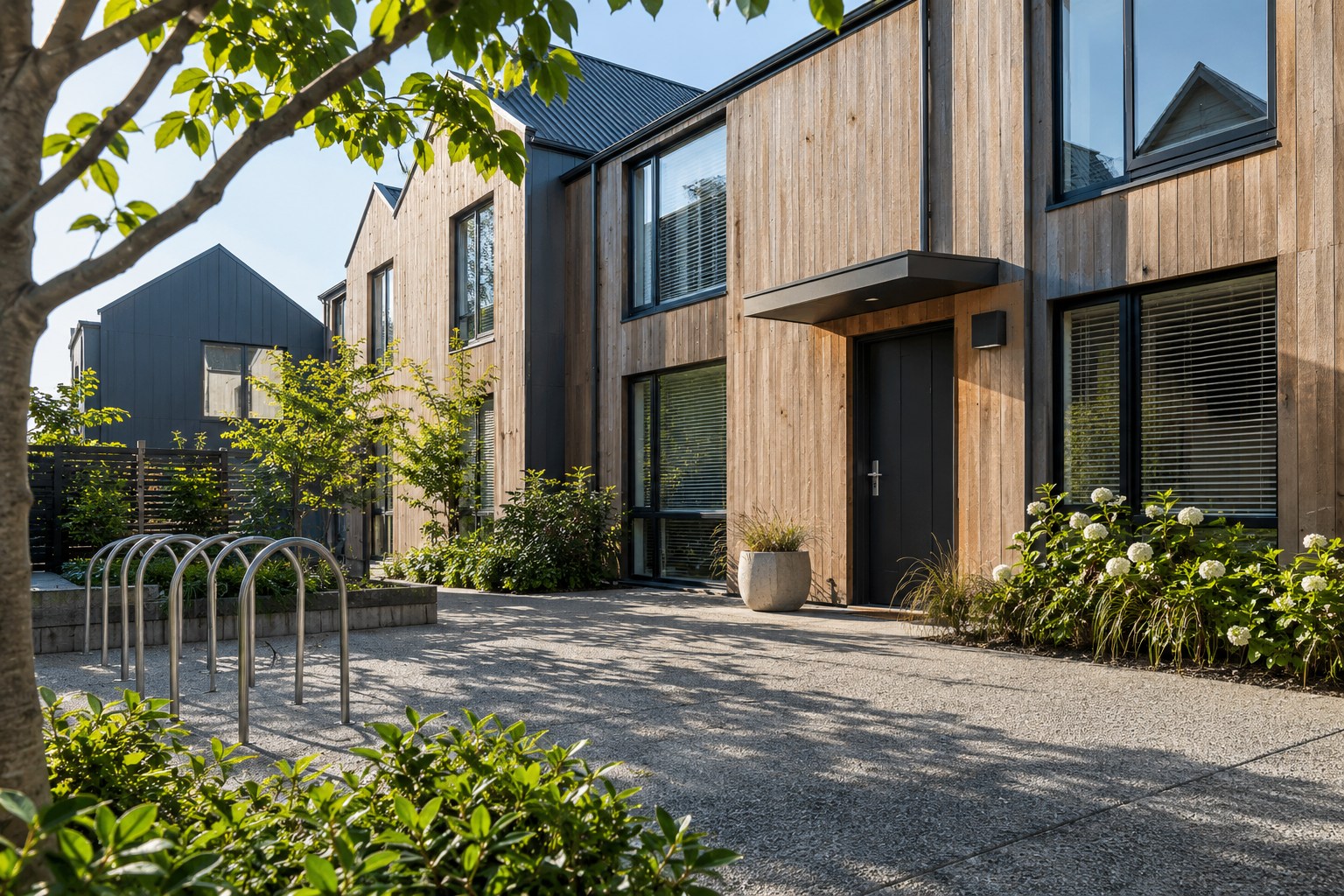
From listing to settlement: buying and selling a property
A purchase moves from viewings and property checks to an offer, a signed sale and purchase agreement, satisfaction of conditions and settlement. On settlement day, funds are transferred, ownership is registered and possession follows the agreed terms. Solicitors and conveyancers manage title searches, mortgage instructions, documentation and transfers.
Sellers can market by asking price, negotiation, auction, tender or deadline sale. A seller comparing multiple offers may prefer certainty or a suitable settlement date over a higher conditional price. Auctions can draw bids into the open but usually require buyers to prepare unconditionally. Tenders and deadline sales accept private offers without assuring competitive bidding.
The selling agent ordinarily represents the vendor, while owing buyers duties of fairness and honesty. An agency agreement sets out the appointment, commission, advertising charges and authority to sell. The Real Estate Authority (REA) oversees licensed professionals and publishes consumer guides. To calculate net sale proceeds, subtract commission, marketing, legal and moving costs, mortgage repayment or break charges, and any agreed repairs from the eventual sale price.
Settlement dates affect insurance start times, mortgage drawdown, rent and moving arrangements. Someone selling one home while purchasing another may need bridging finance or a conditional contract. After debt and transaction charges, a sale with a large headline price can leave much less usable equity than expected.
Renting, landlords and residential property investment
Most residential tenancies fall under the Residential Tenancies Act. Fixed-term and periodic agreements bring rules on rent increases, bonds, notices, repairs and dispute resolution. Owners may manage a rental themselves or employ a property manager for rent collection, maintenance and compliance. Unresolved disagreements can reach the Tenancy Tribunal.
Tenancy Services limits an ordinary tenancy bond to four weeks' rent. Since December 2025, a landlord who agrees to a new pet may also charge a separately identified pet bond of up to two weeks' rent where the statutory conditions are met. The two bonds have different purposes and must be handled correctly at the start and end of a tenancy.
Unless exempt, residential rental homes must meet the healthy homes standards on heating, insulation, ventilation, moisture ingress and drainage, and draught stopping. Working smoke alarms and other safety duties still apply. A rental forecast that ignores the cost of reaching or maintaining compliance overstates its likely return.
At NZ$650 weekly rent, a NZ$750,000 property produces a theoretical gross rental yield of 4.5% (NZ$650 × 52 ÷ NZ$750,000). That assumes payment every week and deducts nothing. Council rates, insurance, property management, maintenance, body corporate fees, vacancies, interest and tax all sit below the gross figure. A vacant month or unexpected roof repair is enough to expose the difference between headline yield and cash in hand.
Rising property values do not pay a mortgage instalment. A leveraged rental can gain on paper while requiring monthly cash contributions. Local wages, tenant demand, competing rentals, vacancies and the time it might take to sell matter alongside capital growth and gross yield.
Property tax rules that affect the calculation
For residential sales on or after 1 July 2024, Inland Revenue's bright-line test generally checks whether the relevant sale date is within two years of the relevant acquisition date. Main-home exclusions and rollover relief have conditions. Other land-sale tax rules can still apply, notably where the property was bought for resale or the seller deals in or develops land.
From 1 April 2025, eligible interest on borrowing for residential rentals is generally 100% deductible under ordinary tax rules. Residential rental loss ring-fencing can prevent excess deductions being offset against unrelated income. Tax treatment differs between an owner-occupied house, long-term rental, short-stay accommodation and a development project.
Commercial real estate and property development
Commercial property ranges from offices and shops to warehouses, logistics premises, hotels, data centres and tenanted investment buildings. Ownership ties capital to a site but gives a business more control; leasing preserves funds and makes relocation easier. Fit-out, expected occupancy, financing and the likely time at that address determine which arrangement fits.
Commercial rent quotations need decoding. Under a net rent arrangement, the tenant usually pays base rent plus specified outgoings, including rates, insurance or operating costs; gross rent combines more of those charges in the quoted amount. ADLS-form leases and negotiated contracts can set rent reviews, renewal options, make-good work, security and repairs. Read the allocation of costs before comparing two annual rental figures.
A commercial investor should compare price with net operating income after relevant property expenses. A long lease is not automatically safe: tenant covenant, impending expiry, vacancy, seismic condition, building warrant of fitness responsibilities, capital spending and the cost of finding a replacement tenant all affect risk. Finance and GST treatment also differ from typical house purchases.
In November 2026, Colliers reported about NZ$2.96 billion of commercial investment sales across the prior four quarters in its dataset of deals worth NZ$6 million or more. It tracks large transactions, not every property sale. Offices, industrial buildings, retail and hotels followed different patterns; greater aggregate deal value does not automatically mean more transactions.
Development depends on zoning, site access and infrastructure before building starts. A project may need resource consent, building consent, construction finance, capable contractors and final code compliance. Approved consents do not remove developer solvency risk, specification changes or completion delays. For an off-the-plan buyer, the contract terms govern what happens if the project changes.
Can overseas buyers purchase real estate in New Zealand?
Eligibility to buy New Zealand residential property depends on citizenship, residence, land status and the proposed transaction. New Zealand citizens and qualifying ordinarily resident permanent residents can generally buy without overseas-investment consent. Restrictions apply to other overseas persons buying residential or lifestyle land. Specific consent pathways and exemptions remain available. Australian and Singaporean citizens and permanent residents have separate arrangements.
From 6 March 2026, eligible holders of Active Investor Plus, Investor 1 or Investor 2 visas gained a pathway to buy or build a home worth at least NZ$5 million. Other overseas-buyer restrictions remain. The LINZ overseas-investment guidance sets out eligibility, including sensitive-land issues; complex ownership structures or binding offers call for specific legal advice.
Which property decision holds up under pressure?
A purchase that only works with low interest rates, full occupancy and no repairs has little margin for error.
- First-home buyer: assess repayments at a higher interest rate, allow for maintenance and insurance, and confirm that finance and KiwiSaver arrangements work with the contract timetable.
- Owner moving house: calculate usable equity after selling costs, debt repayment and any bridging finance. Check whether the new property solves a genuine space, location or accessibility need.
- Residential investor: stress-test rent, vacancy, interest, maintenance, healthy homes compliance and tax. Compare net cash flow and exit liquidity, not just gross yield.
- Commercial buyer or tenant: test lease commitments, outgoings, fit-out requirements, seismic and building compliance, and the consequences if the business contracts or relocates.
Before becoming unconditional, test five points: sale evidence for the agreed price; title rights for the intended use; building and natural-hazard condition; insurer and lender acceptance; and ownership costs after a fall in income, a rate increase or an empty tenancy. Each can overturn an attractive asking price.