
A New Zealand film can take you into a small East Coast community, a West Auckland household or the middle of the bush. A local television series can make the same places familiar over years rather than hours. Movies and television are part of everyday entertainment in Aotearoa, but they also preserve accents, humour, languages and experiences that are easily lost in a catalogue dominated by international releases.
Finding something worth watching involves two separate choices: which story suits the occasion and where that title is legally available in New Zealand. Free broadcaster apps, subscription services, cinema releases, archives and one-off rentals offer different kinds of access. A show appearing in an online search does not guarantee that a New Zealand account can stream it, or that the full film is free.
The stakes extend beyond box-office returns. In 2025, 73% of New Zealanders surveyed for NZ On Air, the New Zealand Film Commission and Te Māngai Pāho agreed locally made screen content helps shape national identity. The question for viewers is not simply what is popular worldwide, but what kind of story they want to spend time with.
What makes a film or television programme a New Zealand story?
Movies, or feature films, normally tell a self-contained story within a single screening. Short films can do the same in a few minutes; documentaries use nonfiction material to examine real people, places and events. Television covers continuing dramas, limited series, sitcoms, reality programmes, factual series, current affairs, children's programmes and broadcasts watched live or on demand. A six-part drama and a weekly rural documentary have different rhythms, even when both are described as television.
“Made in New Zealand” can describe distinct things. A locally written, financed and produced drama may be rooted in the communities whose lives it depicts. An international blockbuster may use New Zealand locations, crews and visual-effects facilities while telling a story set elsewhere. Both contribute to the screen industry, but filming in Aotearoa does not automatically make a work a New Zealand cultural story.
That distinction matters when choosing local cinema. Whale Rider draws on a story by Māori novelist Witi Ihimaera and the world of Whāngārā; The Lord of the Rings brings J. R. R. Tolkien's Middle-earth to life through New Zealand landscapes and filmmaking expertise. They have very different relationships with place, authorship and identity.
From early cinema to distinctive Kiwi filmmaking
New Zealand filmmaking long predates the global visibility of Peter Jackson and Wētā. Early pioneers such as Rudall Hayward, Ramai Hayward and John O'Shea worked in an industry with limited resources and a small domestic audience. The 1970s and 1980s gave local features fresh momentum: Roger Donaldson's Sleeping Dogs (1977) explored political unrest, while Geoff Murphy's Goodbye Pork Pie (1981) turned a cross-country road trip into irreverent Kiwi comedy. NZ On Screen's film history traces those earlier voices alongside filmmakers such as Gaylene Preston, Merata Mita and Barry Barclay.
Later films showed that stories specific to Aotearoa could reach audiences far beyond it. Jane Campion's The Piano (1993) brought international attention to a period drama filmed in New Zealand. Lee Tamahori's Once Were Warriors (1994), adapted from Alan Duff's novel with a screenplay by Riwia Brown, confronted domestic violence and the pressures on a Māori family in urban Auckland. Its subject matter is confronting rather than light entertainment; it belongs in a different viewing conversation from a family comedy.
Niki Caro's Whale Rider (2002) follows Pai, played by Keisha Castle-Hughes, as she challenges expectations surrounding leadership in her Whāngārā community. Its combination of family conflict, whakapapa and intergenerational change offers a very different experience from Taika Waititi's Boy (2010), in which a child's imagined version of his absent father collides with reality. Waititi uses 1980s pop culture and dry humour to make a personal story accessible without removing its sadness.
Waititi's What We Do in the Shadows (2014), made with Jemaine Clement, finds comedy in the mundane lives of vampire flatmates. His Hunt for the Wilderpeople (2016), with Julian Dennison and Sam Neill, transforms a bush adventure into a story about belonging and an unlikely family. The contrast between those films is useful: “New Zealand film” is not a single genre or mood.
Pasifika stories have also expanded the picture. Sione's Wedding (2006), written by James Griffin and Oscar Kightley and directed by Chris Graham, places Samoan friendships and family expectations at the centre of a comedy set in Auckland. Miki Magasiva's Tinā (2025), starring Anapela Polataivao, connects grief after the Christchurch earthquakes with Samoan community, teaching and choral music. Their humour, emotion and cultural specificity are different ways of making the experiences of New Zealand communities visible.
Television: from the living-room schedule to streaming
New Zealand's first regular television transmission began in Auckland on 1 June 1960. The opening broadcast lasted three hours and was received only in Auckland. Separate regional stations followed, with a national network arriving in 1969. Television gradually became a shared place for news, popular music, sport, children's entertainment and fictional characters who felt recognisably local.
Two enduring programmes show the breadth of that tradition. Country Calendar, which began in 1966, documents farming and rural life without requiring its audience to live on a farm. Shortland Street, launched in 1992, made a fictional hospital and its changing cast part of New Zealand's everyday cultural vocabulary. One works through observation; the other uses the pace and familiarity of a continuing soap opera.
Local scripted television moved well beyond those established formats. Outrageous Fortune follows the West family through crime, loyalty and reinvention; its prequel Westside expands that world. The Brokenwood Mysteries combines a small-town setting with detective stories, while Wellington Paranormal borrows the deadpan supernatural humour of What We Do in the Shadows. After the Party, created by Robyn Malcolm and Dianne Taylor, explores the personal consequences of a disputed allegation rather than offering the simple resolution of a conventional crime drama. These works have also found audiences overseas, as described in NZ On Screen's account of local television production.
Factual and reality television can capture parts of New Zealand life that scripted drama rarely reaches. The Casketeers follows the team at Tipene Funerals, bringing humour, grief and tikanga Māori into the same programme. Earlier titles such as Radio with Pictures, Spot On, Koha and Mataku reveal the changing tastes, audiences and storytelling approaches of different television eras. Their value is cultural as well as nostalgic.
The old distinction between “television” and “online video” is now less useful than the distinction between live channels, catch-up episodes and on-demand libraries. In NZ On Air’s 2026 audience figures, local linear television and broadcaster video on demand had a combined daily reach of 63%, compared with 62% for global video-sharing platforms. Those figures measure use, not the quality of what people watched; they show why scheduled TV and streaming both remain relevant to Kiwi households.
Māori and Pasifika voices on screen
Māori representation cannot be reduced to scenery, mythology or the presence of Māori characters. Authorship matters: who shapes the story, who controls the camera and whose perspective determines what the audience sees. Filmmakers Merata Mita, Barry Barclay and Don Selwyn helped establish pathways for Indigenous screen storytelling, challenging the assumption that Māori experience should be interpreted mainly by outsiders.
Whakaata Māori, launched as Māori Television in 2004 and renamed in 2022, gives te reo Māori, tikanga and Māori perspectives dedicated broadcast and digital space. Its on-demand service MĀORI+ brings together films, series and other programming, including international titles. Bilingual productions such as Ahikāroa make language part of contemporary life rather than confining it to historical settings.
The connection between screen culture and community is just as visible in Pasifika storytelling. The television drama The Panthers centres the Polynesian Panthers movement and the experiences of Pacific communities in 1970s Auckland; Sione's Wedding finds comedy in Samoan family and church life; Tinā uses music to explore the relationships between generations. These productions do not speak for every Māori or Pasifika viewer. They widen the range of people, places and cultural perspectives that can occupy the centre of a New Zealand story.
Language access changes the viewing experience. Te reo Māori dialogue, bilingual scripts, English subtitles and closed captions serve different needs. An English-language title does not necessarily convey how much te reo appears within a programme, so the language and accessibility details on an individual listing are more useful than the platform name alone.
Where to watch movies and television in New Zealand
The biggest obstacle is often distribution rather than discovery. Film and television rights are licensed by territory, platform and time period. A title available in Australia, the United Kingdom or the United States may not appear on the equivalent service in New Zealand. A film may move from cinemas to digital rental, then to a subscription catalogue, then disappear when the licence expires.
These viewing routes solve different needs:
| Viewing route | New Zealand options | What to check |
|---|---|---|
| Free broadcaster streaming | TVNZ+, ThreeNow and MĀORI+ carry mixes of shows, films, live streams and local programming. | Advertising, sign-in requirements, expiry dates and whether a particular item is free. |
| Free-to-air television | Freeview provides access to channels and an electronic programme guide. | Whether reception or a compatible streaming device is available; the schedule is not a permanent on-demand library. |
| Local screen archive | NZ On Screen offers free-to-view heritage material, clips and selected complete works, alongside NZOS+ feature-film rentals. | Whether the entry is a full programme, an excerpt, a trailer or a paid rental. |
| Subscriptions | Netflix, Disney+, Prime Video and Neon offer subscription catalogues; Sky Go provides eligible Sky subscribers with access to content in their packages. | Current NZ availability, the plan, simultaneous streams, picture quality, captions and cancellation terms. |
| Single-title rental or purchase | Digital stores, NZOS+ and selected TVNZ+ Pass titles provide an alternative to another monthly subscription. | The payment, viewing window, device limit and whether the licence is a rental or purchase. |
| Cinema and festivals | Multiplexes, independent cinemas, special screenings and film festivals show work that may not yet have a home-streaming release. | Local screening dates, accessibility sessions and whether the film will later have a digital release. |
TVNZ+ is not an entirely free catalogue. Much of its programming is free to stream, but the service also offers separately paid content, including time-limited film rentals. NZ On Screen's NZOS+ similarly distinguishes paid feature rentals from its free archive. These details prevent two familiar surprises: finding only a trailer when you expected a film, or discovering a payment requirement after choosing a title.
Freeview On Demand has ended. Freeview's own support guidance points viewers to broadcaster services such as TVNZ+, ThreeNow and MĀORI+ for catch-up programmes. Freeview remains useful for live-channel discovery and the TV guide; it should not be mistaken for the former on-demand catalogue.
A title-specific search is often faster than opening five apps in succession. Flicks brings together New Zealand streaming listings, cinema sessions and information about rentals or purchases. Availability still needs a final check on the provider's own listing, especially for older films, newly released episodes and shows that have changed distributors.
Choosing the right film or show for the occasion
A feature film suits an evening with a definite finish. A continuing series is better for people who want to spend time with characters over several weeks. A documentary may suit an interest in local history, music, sport, politics or the environment, but its factual focus does not guarantee that every claim is beyond dispute. A comedy can be familiar without being suitable for all ages; a children's programme can be entertaining without being designed for adults.
Genre labels alone rarely describe the experience accurately. Someone looking for warm family humour might enjoy Hunt for the Wilderpeople more than the unsettling domestic realism of Once Were Warriors. A viewer who likes the supernatural absurdity of Wellington Paranormal might not want the serious tone of After the Party. The story's premise, content warning, length and tone are more dependable filters than a broad label such as “drama”.
Time makes a practical difference too. A 90-minute film, a two-hour cinema release, a half-hour comedy and an eight-episode season require different commitments. For whānau viewing, the age classification and detailed content warning matter more than the assumption that a film with younger characters must be child-friendly. For a household using limited mobile data, the required internet connection and availability of permitted downloads can matter as much as the title.
Ratings, content warnings and accessible viewing
New Zealand's film classification system separates unrestricted labels from legal age restrictions. G, PG and M do not by themselves make a film legally restricted to a particular age. PG signals that parental guidance is appropriate; M is intended for mature audiences. R13, R15, R16 and R18 carry enforceable age limits. RP classifications allow an underage viewer to watch only when accompanied by a parent or guardian under the stated conditions. The Classification Office explains the differences and offers classification information for individual titles.
Streaming services may display New Zealand classifications or permitted self-rating labels, including numeric indicators such as 13, 16 and 18. Broadcast television also operates under Broadcasting Standards Authority rules; a television programme marked M is not the same thing as a legally restricted R-rated film. The content description is useful alongside the rating because violence, distressing themes, strong language and sexual material affect households differently.
Captions and subtitles are not interchangeable. Closed captions can include speech and important sound information, which helps Deaf and hard-of-hearing viewers. Subtitles generally convey dialogue in text and may provide translation for te reo Māori, Samoan or other languages. Availability varies between titles and services. Playback controls, screen-reader compatibility, audio description, internet speed and device support can determine whether an apparently available film is actually accessible.
Cinema, film festivals and stories beyond the algorithm
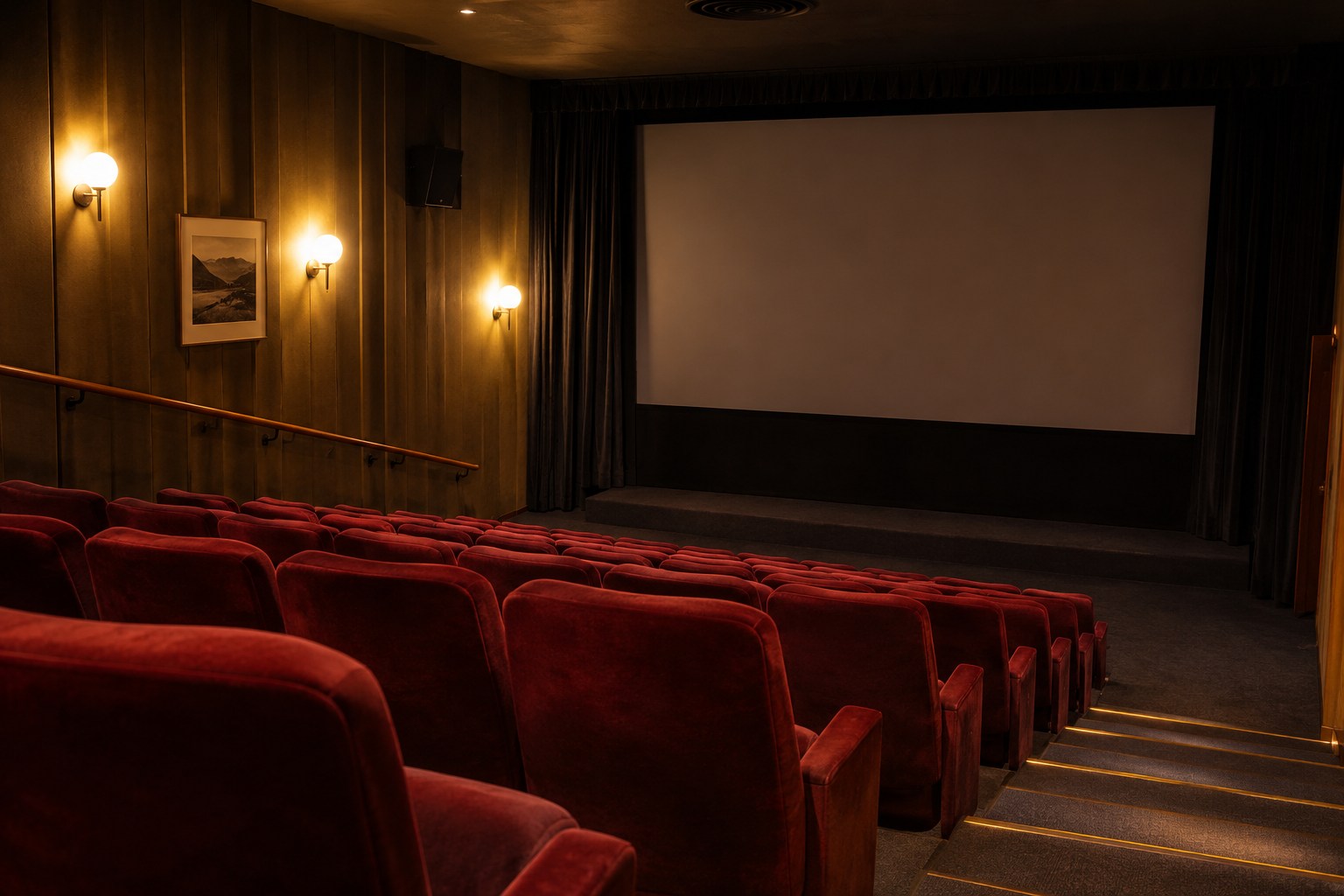
Watching at a cinema changes the experience: a documentary becomes a public conversation, a local comedy meets the audience it depicts, and a short film can be encountered alongside work from filmmakers around the world. Whānau Mārama: New Zealand International Film Festival takes films to multiple centres, including Auckland, Wellington, Christchurch and Dunedin. Doc Edge specialises in documentary filmmaking, with cinema screenings and online festival offerings when rights permit.
Festivals, community screenings and independent cinemas offer a route to Māori, Pasifika, experimental and documentary work that may not receive prominent placement on large streaming homepages. Local libraries and screen archives provide another route to older programmes, short films and material that has fallen out of commercial rotation. A limited festival run should not be confused with a guaranteed later release on a subscription platform.
The people and places behind New Zealand screen production
What appears on screen begins with writers, actors and directors, but also depends on producers, cinematographers, editors, sound teams, composers, designers, animators, technicians and distributors. The New Zealand Film Commission supports local filmmaking and international production, while NZ On Air helps fund qualifying local screen content. Te Māngai Pāho supports Māori-language and cultural media. Each organisation has a different remit; none is a substitute for the creators and communities whose work reaches viewers.
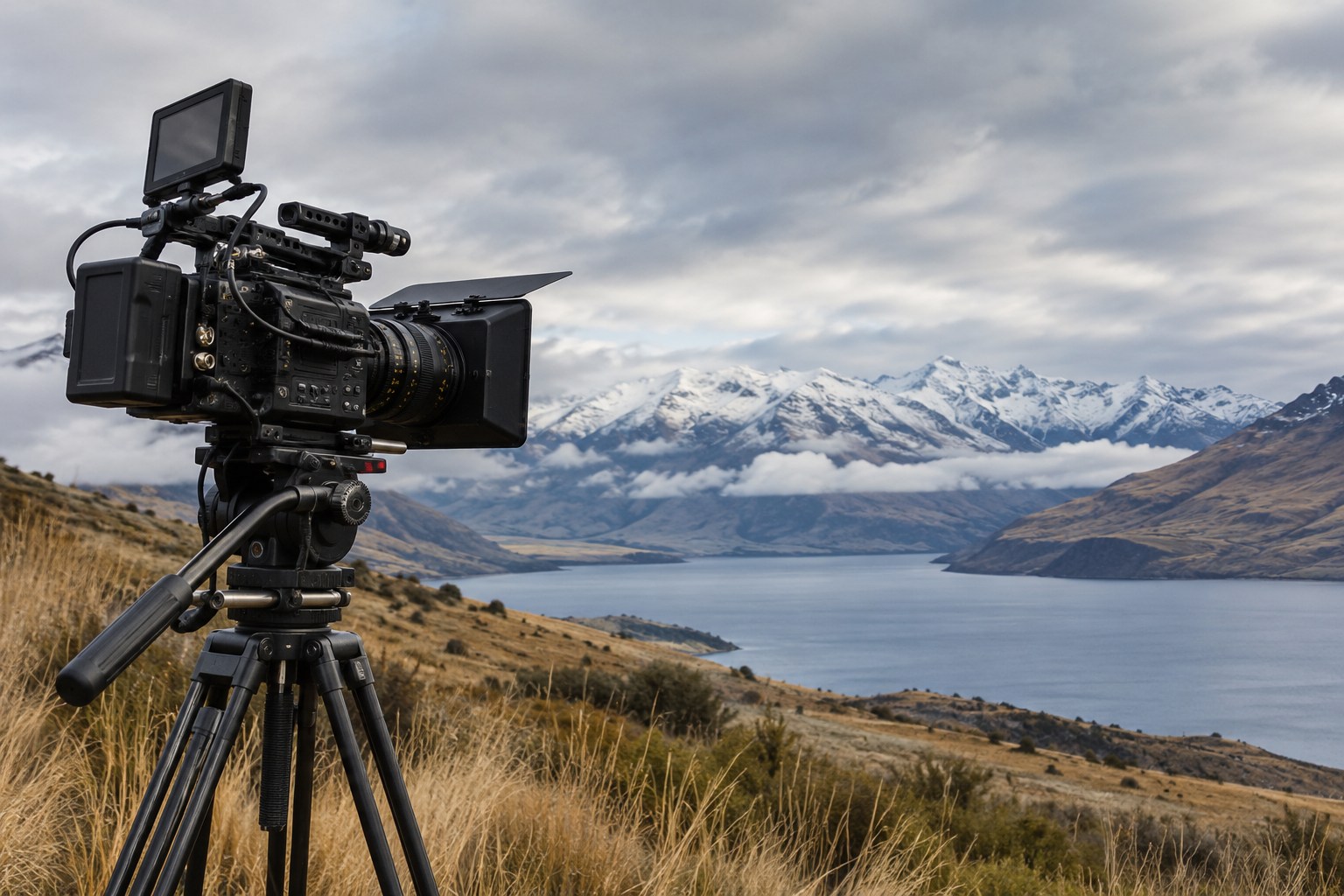
Wellington's Miramar screen sector illustrates the connection between local talent and international production. Wētā FX works in visual effects and animation, while Wētā Workshop specialises in physical effects, design and manufacture. Studios and post-production facilities across the region support film and television work. New Zealand's locations also served as Middle-earth in Peter Jackson's The Lord of the Rings trilogy and The Hobbit films. Matamata's Hobbiton Movie Set is a visible example of the link between screen production, landscapes and tourism.
International projects employ New Zealand screen professionals and develop technical capacity, but those benefits do not eliminate the need for locally authored stories. A healthy film and television culture needs the infrastructure to make ambitious productions and the creative space for work that reflects Aotearoa on its own terms.
Why local movies and television remain worth finding
A global streaming library can supply endless choice while making nearby stories strangely difficult to locate. New Zealand films and programmes answer a different need: they let audiences recognise a place, hear a familiar way of speaking, encounter a perspective they do not share or revisit a moment in the country's cultural history. That recognition can come from a hospital soap, a documentary about rural life, a bilingual drama or a comedy set among friends in Auckland.
The strongest viewing choice is not necessarily the newest release or the title at the top of an app. It is the work whose story, format, tone, language, accessibility and actual New Zealand availability fit the people watching it. Keeping those factors together makes movies and television easier to choose without losing the cultural variety that gives Aotearoa's screen stories their character.