
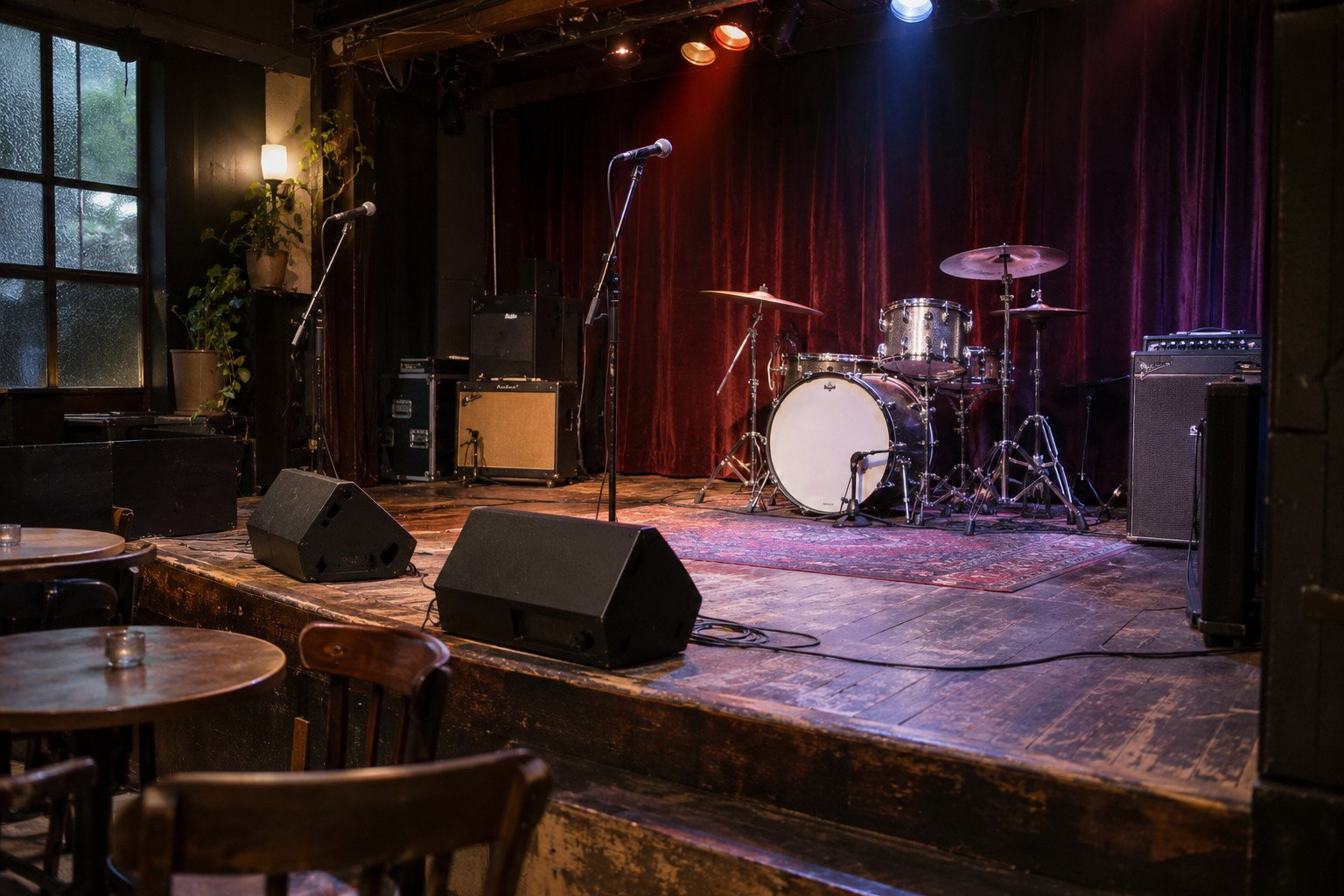
Aotearoa's live-music calendar stretches from international tours at Spark Arena in Auckland to basement gigs on Karangahape Road. Wellington has jazz rooms and touring indie acts; Christchurch pairs stadium shows with summer festivals. Dunedin's guitar-music legacy lives alongside today's bands, and regional towns run their own gigs and community concerts.
A theatre seat offers a different night from a standing gig or camping festival. Entry rules and the way home can matter as much as the headliner.
How to find concerts and live gigs in New Zealand
For international tours, check the artist, promoter or venue for dates and the authorised ticket seller. Small gigs often surface first on venue calendars and community guides. Searching by city and date, then genre, is more useful than a generic 'concerts near me' query when choosing a particular evening.
| What you want | Where to look | What to confirm |
|---|---|---|
| Indie bands, punk, album launches and small gigs | UnderTheRadar and individual venue calendars | Support acts, door time, age policy and ticket seller |
| Events in a particular city or on a particular night | Eventfinda, regional event guides and local venue listings | Whether the listing is current and whether seats remain |
| Large concerts and touring performers | Live Nation New Zealand, Ticketmaster NZ and Ticketek NZ | Official onsale links, city, venue and final price |
| Classical, chamber and orchestral performances | New Zealand Symphony Orchestra, Auckland Philharmonia and Chamber Music New Zealand | Programme, running time and seating |
| New Zealand artists and community music | NZ Music Month gig listings, local radio and arts organisations | Free entry, booking requirements and all-ages access |
UnderTheRadar announced in October 2026 that its ticketing service was winding down and it had stopped taking new bookings for future events. Its journalism and nationwide Gig Guide continue; a listing there no longer establishes where a new ticket should be purchased.
Where to hear live music: the main New Zealand scenes
Auckland / Tāmaki Makaurau
Auckland's larger shows take place at Spark Arena, Eden Park, Auckland Domain and Western Springs. Auckland Town Hall and The Civic offer seated concert settings. Powerstation in Eden Terrace fills the gap between a small club and a major arena.
Karangahape Road, known as K' Road, is a centre for independent gigs. Whammy Bar occupies a basement in St Kevin's Arcade and is associated with indie, punk and alternative music. Double Whammy, Neck of the Woods and The Tuning Fork add smaller-room options; record shops and late-night venues are nearby.
Wellington / Te Whanganui-a-Tara
Wellington's compact centre puts several live-music rooms near Cuba Street. San Fran books touring indie, funk and electronic acts; Meow Nui handles larger standing crowds. Valhalla leans towards heavy and underground music, while Cuba Street and Aro Valley host DJs, soul and jazz.
For seated performances, Wellington has the Michael Fowler Centre, St James Theatre, The Opera House and TSB Arena. The NZSO plays here as well as touring elsewhere. An orchestral concert and a late San Fran gig call for different seating, timing and transport plans.
Christchurch / Ōtautahi
Christchurch Town Hall, the Isaac Theatre Royal and The Piano host concerts and recitals; Wolfbrook Arena accommodates bigger productions. Space Academy supports smaller gigs. Fat Eddie's, Smash Palace and other central-city venues put bands, jazz and DJs in the central-city nightlife mix.
Electric Avenue brings multiple stages to Hagley Park each summer. A nearby club gig is a simpler plan than a full festival day, particularly for transport and waiting times.
Dunedin / Ōtepoti and the regional circuit
The Dunedin Sound grew around groups including The Clean, The Chills, The Bats and The Verlaines. Soaked Oats, Mild Orange and Wax Mustang are among newer Dunedin-linked acts. Errick's and Inch Bar serve smaller crowds; Dunedin Town Hall, the Regent Theatre and Forsyth Barr Stadium accommodate larger performances.
Beyond Auckland, Wellington and Christchurch, Hamilton / Kirikiriroa, Tauranga, Napier, Nelson and Whanganui host local gigs and selected tours. The NZSO also visits regional centres that seldom feature on major pop-tour itineraries.
Music festivals: the summer 2026–27 calendar
New Zealand's outdoor festival season peaks between December and March. A city day pass, a camping event and a weekend of world music have different costs and entry conditions. These dates and venues were announced by organisers as at November 2026.
- Rhythm and Vines — 28–31 December 2026 at Waiohika Estate, Gisborne / Tairāwhiti. The festival mixes electronic music, hip-hop and New Zealand acts. This is the final edition at Waiohika Estate; organisers have announced a move to a yet-to-be-disclosed location in 2027.
- Rhythm & Alps — 30–31 December 2026 in the Cardrona Valley near Wānaka. The 2026 line-up includes BENEE, Fat Freddy's Drop, Shapeshifter and international dance acts. Mountain-valley travel and accommodation are part of the experience.
- Northern Bass — 30–31 December 2026 in Kaiwaka, Northland. Drum and bass, grime, hip-hop and electronic music are the centre of the programme, with separate camping and day-pass arrangements.
- Laneway Festival Auckland — 21 February 2027 at Western Springs. The line-up includes Fontaines D.C., Hayley Williams and a mix of international and local alternative artists. The Auckland event is restricted to people aged 18 and over, and re-entry after leaving is not permitted.
- Electric Avenue — 26–27 February 2027 at Hagley Park, Christchurch. Kings of Leon and Calvin Harris are among the announced headliners. Its two-day format suits fans who want to see several styles and performers in one place.
- WOMAD Aotearoa — 12–14 March 2027 at Brooklands Park and the Bowl of Brooklands, New Plymouth / Taranaki. Its programme centres on music, arts and dance from around the world. Children are permitted under the festival's entry conditions, making it a different proposition from an R18 event.
- Homegrown — 3 April 2027 at Claudelands Oval, Hamilton. The festival is devoted to New Zealand music, from rock and reggae to other homegrown styles, and requires attendees to be at least 18.
Two favourite acts can play on separate stages at the same time. Day passes, camping tickets and accommodation carry separate costs. Laneway's entry rules specify accepted photo ID and no re-entry, while WOMAD permits certain picnic items and reusable water bottles. One festival's policy does not carry over to another.
New Zealand's music is more than the touring calendar
Māori and Pacific music, pop, rock, reggae, country, hip-hop, jazz and electronic production all shape the sound of Aotearoa. Lorde and BENEE have international pop careers; Fat Freddy's Drop, L.A.B., Katchafire and The Black Seeds take different approaches to roots and reggae. Six60 and Stan Walker represent different sides of popular music; Tami Neilson and Marlon Williams draw on country traditions, Aldous Harding and The Beths on indie sounds, and Home Brew on hip-hop. These names do not imply current tour dates.
Waiata, te reo Māori and taonga puoro
Waiata in te reo Māori belong to a living musical culture, including contemporary pop, hip-hop, orchestral and experimental work shaped by whakapapa. The APRA Tohu Maioha / Maioha Award recognises songwriting in te reo Māori. Rob Ruha is among the performers bringing Māori language and musical ideas to contemporary audiences.
Taonga puoro are traditional Māori musical instruments, including kōauau flutes and pūrerehua, also heard in new compositions. Chamber Music New Zealand's Ā mua, created by Tina Makereti and Riki Pirihi, combines taonga puoro, spoken language and strings. The artists and cultural context distinguish this music from a catch-all 'world music' label.
Jazz, orchestral music and smaller listening rooms
Wellington's jazz musicians play in small listening rooms as well as larger venues. The NZSO tours orchestral programmes; Auckland Philharmonia performs in Tāmaki Makaurau; Chamber Music New Zealand presents ensembles across the country. Before choosing seats, check the repertoire, acoustics, sightlines and whether the programme has an interval.
Each May, NZ Music Month / Te Marama Puoro o Aotearoa puts locally made music in focus. Schools, libraries, marae, community halls and all-ages venues join clubs and concert halls, making emerging artists easier to hear beyond the commercial touring circuit.
Choosing a gig by the experience you actually want
For a favourite international artist, check which New Zealand cities are on the tour. At Spark Arena or Wolfbrook Arena, seating and standing areas depend on the production. A cheap side-stage or restricted-view seat may be poor value even if tickets remain available.
For discovering new music, smaller rooms such as Whammy Bar, San Fran, Space Academy or a local pub offer album launches and support acts. Expect less seating, later sets or licensed-premises age restrictions; verify the details for the actual show.
For a shared day with friends or whānau, a multi-act festival gives everyone several performances to choose from. WOMAD's family entry conditions differ from an R18 festival. Anyone determined to hear one artist's full set may prefer a solo concert without stage clashes.
For an attentive, seated performance, look at orchestral programmes, chamber music, acoustic tours or jazz recitals. Check running time, intervals and sightlines before choosing a ticket tier.
Concert tickets, resale and the real cost of going
Follow ticket links from the artist, promoter, festival or venue. Search ads labelled 'official tickets' can lead to resellers instead. New Zealand's Consumer Protection guidance advises checking that the outlet is authorised and reading the terms before payment.
Ticketmaster, Ticketek, Eventfinda and iTICKET serve different New Zealand events; none covers every show. An arena tour, local venue and festival may use three separate sellers. Compare the final checkout total, not just the advertised ticket price. For travel away from home, include accommodation, transport, food and camping costs.
Resold tickets can be duplicated, priced above face value or transferred against event rules. The Commerce Commission cautions against mistaking a prominent reseller for an authorised outlet. Where official transfer or resale exists, use the event's process rather than a stranger's QR-code screenshot. Refund rights after cancellation, postponement or programme changes depend on the circumstances, ticket terms and consumer law.
Age limits, accessibility and getting home
New Zealand concerts have no universal minimum age. Some are R18; others admit under-18s with a parent or legal guardian, or are all-ages. The specific event's conditions govern entry. Buying a ticket without checking them risks being turned away at the door.
Access arrangements also vary by venue. Whammy Bar is in a basement and its Auckland venue guide states that it is not wheelchair accessible. Spark Arena describes accessible and companion seating and mobility parking. Outdoor festivals may involve gravel, grass or long distances between stages; Laneway's accessibility information sets out assistance and viewing arrangements.
Doors opening does not mean the headliner starts then; support acts may play much earlier. Check published set times, bag rules and digital-ticket requirements. At outdoor events, bring appropriate sun protection, water and warmer clothing, subject to the organiser's permitted-item rules. Hearing protection is worthwhile near loud speakers.
Auckland arena transport differs from reaching a campsite in Northland, the Cardrona Valley or rural Tairāwhiti. The last train, bus or shuttle often determines whether a return trip works. Accommodation and the return journey need planning for regional festivals.
Common questions about music and concerts in NZ
Where can I find small local gigs rather than arena tours?
UnderTheRadar's Gig Guide, Eventfinda's city filters, venue calendars and local music radio cover many smaller shows. Album launches can appear with little advance publicity.
Can under-18s attend live concerts?
Yes, where the event permits it. Laneway Auckland 2027 and Homegrown 2027 are R18; other concerts allow supervised or all-ages entry. Check accepted ID and guardian rules.
Are there free concerts in New Zealand?
Yes. Community events, public spaces and NZ Music Month programmes offer free music. Capacity and age limits can still apply.
What is the best season for music festivals?
December to March is peak outdoor-festival season. Indoor gigs and orchestral concerts run year-round, while NZ Music Month spotlights local artists each May.
Do I need to travel to Auckland for a major concert?
No. Wellington, Christchurch, Dunedin and regional centres receive tours, including NZSO performances. A major international act may schedule only one New Zealand date.