
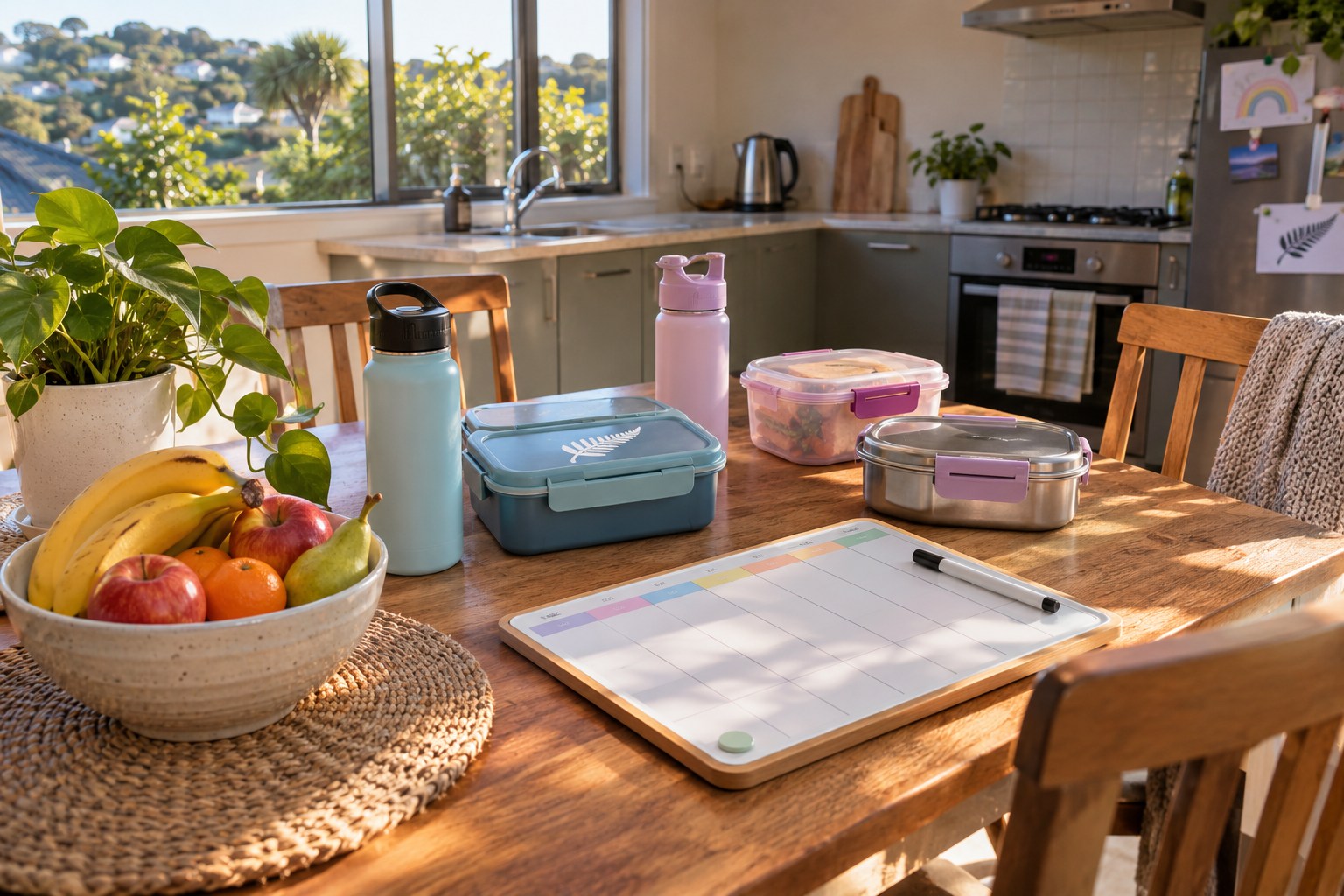
The school bag has vanished, someone is leaving for an early shift, and the power bill is due. Dinner still needs making. For families in New Zealand, a workable week starts with enough food, sleep, warmth and support. Getting through the day matters more than keeping a perfect timetable.
What helps is a routine that fits the people living it. A sole parent with young children, a blended family, grandparents caring for mokopuna and relatives sharing care between homes will not need the same plan. Start with the hours that regularly go wrong, and decide who is responsible for what.
What family wellbeing actually includes
A tidy home tells you little about how a household feels. People may be active and well fed but lonely, short of money or frightened at home. A close family can still struggle with a damp rental, poor sleep or the care of someone who is unwell.
In Te Whare Tapa Whā, developed by Sir Mason Durie, hauora is pictured as a wharenui with four walls: taha tinana (physical wellbeing), taha hinengaro (mental and emotional wellbeing), taha whānau (family and social wellbeing) and taha wairua (spiritual wellbeing). Whenua, or connection to land and belonging, supports the house. Neglect one wall and the whole structure feels less secure.
Whānau need not share one address. Grandparents, aunties, uncles, friends and neighbours often help with rides, meals and care. Whakapapa, te reo, cultural identity and ties to a marae or community may sit alongside school notices and medical appointments. Those connections belong in a family's plans, not just its special occasions.
Build routines around the difficult parts of the day
A routine should survive someone coming home late. Choose a few dependable anchors: leaving the house, the return from school, a meal and the wind-down before bed. A detailed hourly plan is rarely needed.
Mornings without a running argument
The last half-hour before school, kura, early childhood education or work is often the hardest. Pack lunches and bags, find uniforms and check transport the night before. Younger tamariki may follow pictures showing what comes next; older children can manage an alarm, their own gear and a quick look at tomorrow's plans.
Breakfast, suitable clothing and safe transport come before a tidy bedroom. Night-shift workers may need quiet while everyone else gets ready. For a newborn, feeding and sleep set the pace, whatever the clock says.
After-school transitions
After a day of instructions, some children arrive home worn out. Food, water and time without demands can come before homework or sport. Conversation need not start at the door. A child might open up while drawing, making dinner, walking home or kicking a ball.
| Pressure point | Helpful anchor | Where flexibility matters |
|---|---|---|
| Leaving home | Bags and clothes ready the evening before | Different shifts, school starts or shared-care arrangements |
| After school | Food, a breather and a clear next activity | Sport, homework, sensory needs or fatigue |
| Evening | A simple meal and a predictable wind-down | Late work, babies, teenagers and household rosters |
| Weekend | Time for chores, connection and recovery | Weather, transport, caregiving and limited budgets |
Keep a routine only while it solves the problem it was meant to solve. If the same step causes an argument every afternoon, change the timing or the expectation.
Share the work, including the work nobody sees
Someone cooks the dinner; someone else remembers the permission slip, books the GP, replaces the washing powder and knows who needs collecting. That invisible planning is work too. A chore chart does not make the load fair if one person must still remind everybody.
A weekly kōrero about shifts, school events, transport, appointments, meals and bills can expose the pinch points. Give people ownership rather than asking them to “help more”. Being in charge of laundry includes noticing when the sports kit must be washed, not waiting to be told.
Children can contribute without carrying adult responsibilities. Preschoolers can put away toys, school-aged children can sort socks or pack bags, and teenagers can cook part of dinner. Adults still handle safety, supervision and the emotional demands of running the home.
Equal is not always fair. A sole caregiver, someone living with disability or illness, or a family caring for older relatives may need a different arrangement. Look at available time and capacity as well as the number of tasks.
Keep relationships strong when tempers are short
A conversation while folding washing or watching a child's game may do more for a relationship than a costly weekend outing. Partners, children and older relatives all notice when the household only talks about pickups, shopping and bills.
Try asking “What was the hardest part of today?” rather than demanding an explanation for difficult behaviour. With younger tamariki, empathy and a boundary can sit together: “You're upset that playtime is over. Hitting isn't safe. We can sit here until you're ready.” Adults set the pattern by following those boundaries themselves.
Disagreement is different from lasting harm
Families argue. What happens afterwards matters. An adult who shouts can apologise, name the harm and talk about a better response once everyone is calm. Rangatahi may need time or privacy first; an immediate, forced conversation seldom helps.
Threats, intimidation, controlling behaviour and fear are not ordinary family disagreements. No chore roster or communication exercise makes abuse safe. Are You OK offers confidential family violence support. Call 111 if anyone is in immediate danger.
Make physical health part of normal life
Food that fits the household budget
Everyday kai needs to be affordable as well as nourishing. Seasonal or frozen vegetables, fruit, oats, eggs, beans and lentils stretch into familiar meals. Keep a handful of reliable dinners, reuse leftovers for lunches and shop with a list that reflects what is already in the cupboard.
Eating together need not mean dinner at six. Shift work or shared care may make breakfast or a weekend lunch the family meal. Children can rinse vegetables, stir a pot or choose between two options. Avoid turning food into a reward or making comments about bodies the focus of meals.
Movement, play and time outdoors
A game at the park, cycling on a safe route, gardening, dancing in the lounge or walking to the local reserve all count as movement. Organised sport is only one option. Sport NZ encourages play that tamariki choose for themselves. Kapa haka can bring physical activity together with culture and belonging.
Young children need room to invent games, explore and practise skills. Adults can follow their lead while checking that the space is safe. Teenagers may keep moving when they have some choice and friends to do it with. Weather, mobility, transport and equipment costs shape what's possible.
Sleep, health checks and safe spaces
A familiar bedtime sequence of quieter play, a story or a chat, and fewer screens can make settling easier. Sleep needs change with age. Ongoing problems deserve individual advice; Healthify offers guidance on children's sleep and settling.
Safe sleep for pēpi is different from settling an older child. Put babies on their back in their own flat, firm sleep space, clear of pillows, loose bedding and toys. All caregivers need to follow the same arrangement. Well Child Tamariki Ora visits, GP care and the National Immunisation Schedule also help families keep preventive care on track.
A warm, dry home is part of health
A cold, damp house can mean condensation, mould and more respiratory illness. Health New Zealand advises aiming for at least 18°C indoors; where pēpi, tamariki or older people live, it recommends above 20°C if possible. Heating, ventilation, extractor fans and keeping indoor moisture down all have a part to play.
Renters cannot fix a poorly insulated house by opening windows alone. New Zealand's healthy homes standards set requirements for heating, insulation, ventilation, moisture and drainage, and draught stopping. Landlords have legal duties under those standards.
Parenting needs change as children grow
With a new pēpi, feeding, sleep and recovery can take over the day. A cooked meal or someone doing the washing may be more useful than another schedule. PlunketLine gives free, 24-hour nursing advice about children from birth to five, including feeding, sleep, development and caregiver stress.
Preschoolers learn through play, language and clear limits. Early childhood education, playcentres and kōhanga reo offer different ways to learn and belong. School-aged children gain independence but may still need help with friendships and school pressure. Sudden school avoidance, poor sleep or withdrawal from favourite activities deserves attention rather than blame.
Rangatahi need privacy and growing responsibility, with consistent expectations about safety and respect. Talk about money, transport, part-time work, study and phones before a dispute. Wanting space from adults does not, by itself, signal trouble.
A separation, death, house move, new baby or school change can disrupt even familiar routines. Children moving between homes may cope better with a few shared anchors than with identical rules in both houses. Explain transitions clearly; grief may show up differently with age, and extra support can be necessary.

Digital life belongs in family life, not outside it
Games, group chats, videos and social media are part of young people's friendships. Screen time alone tells you little. Ask what they watch or play, who can reach them, whether devices crowd out sleep or school, and whether they would tell an adult if something felt wrong.
Talk through phones at bedtime, devices at meals, privacy settings, in-app purchases, sharing other people's photos and what to do with upsetting messages. Agreements can change as judgement grows. Children notice whether adults follow their own phone rules.
When a child reports bullying, unwanted contact or pressure to share intimate images, listen before threatening to take the device away. Save relevant messages or screenshots and use reporting tools where appropriate. Netsafe's Digital Guardian Guide covers first phones, gaming, digital footprints and online safety. The people and content behind a screen matter as much as the hours spent on it.
Reduce financial pressure before it turns into household conflict
Rent or mortgage payments, power, transport, prescriptions, childcare, uniforms, sports fees and repairs can swallow a family budget. Annual bills and school-term costs are particularly awkward when several land in the same week.
Start with what actually came into and left the account, then cover essential bills. Where possible, set aside small amounts for irregular expenses rather than treating them as surprises. Sorted's money-tracking guidance helps make spending visible. Both adults need access to the figures and room to discuss them without shame or secrecy.
Eligible families may receive Working for Families support, including Best Start, or Work and Income's Childcare Subsidy. Help with out-of-school care, housing or immediate hardship may also apply. Eligibility and payments depend on the household; someone else's entitlement is not a reliable guide.
Money worries become health worries when a family cannot afford heating, food, medicine or enough sleep. Protecting those essentials comes before a savings goal that leaves the household worse off.
Make space for work, caregiving and individual needs
A five-day office job, seasonal work and changing shifts create very different weeks. Someone caring for an older parent, a disabled child or a relative with a long-term condition may also have appointments that others never see. Personal rest belongs on the calendar alongside paid work.
Test the plan against next Tuesday, not an ideal week away. Who collects a sick child? Who shops if the regular driver is unavailable? Can each adult get some uninterrupted rest? A backup plan with whānau, friends or community services reduces the strain when someone is ill or a shift changes.
A shared calendar cannot create affordable childcare or safer work hours. If the same overload keeps returning, fewer commitments or outside care may matter more than another productivity trick.
Belonging matters beyond the front door
Libraries, parks, schools, marae, local clubs and community gardens give families places to meet and spend time without an expensive outing. Friendship and belonging also grow through calls, cultural or faith gatherings, shared food and time with kaumātua.
The Mental Health Foundation's Five Ways to Wellbeing are connect, be active, take notice, keep learning and give. A walk with a neighbour, learning a recipe with a child or listening to family stories can fit several of those habits into an ordinary afternoon.
Nearby whānau and a ready-made circle of friends are not available to everyone. New arrivals, rural households, sole parents and people dealing with illness may rely on just one dependable contact. That relationship still counts.
When everyday stress needs outside support
Persistent worry, exhaustion, frequent conflict or a child pulling away from usual activities may call for more than a new routine. A GP, school pastoral team, early childhood educator or local community service can help work out what support fits. Caregivers need help for themselves as well.
Different services handle different concerns. PlunketLine (0800 933 922) provides free, 24/7 advice for caregivers of children aged 0–5. Healthline (0800 611 116) gives health advice. Parent Help (0800 568 856) helps with parenting and family difficulties. For emotional distress, 1737 offers free, confidential calls or texts at any hour. The Family Services Directory lists support for housing, finances, disability and family needs.
Abuse requires a safety plan, not mediation with the person causing harm. Are You OK (0800 456 450) offers confidential family violence support around the clock. In immediate danger, call 111.
A sustainable week leaves room for people
A sick child, a wet school run or an unexpected shift can undo the neatest plan. Leave room for changes and agree who can cover a pickup or dinner when the usual caregiver cannot.
On a hard Wednesday, that might mean an auntie collecting a child, leftovers for tea and the washing staying in the basket. Everyone is safe and fed; someone turns up when needed. The rest can wait.