
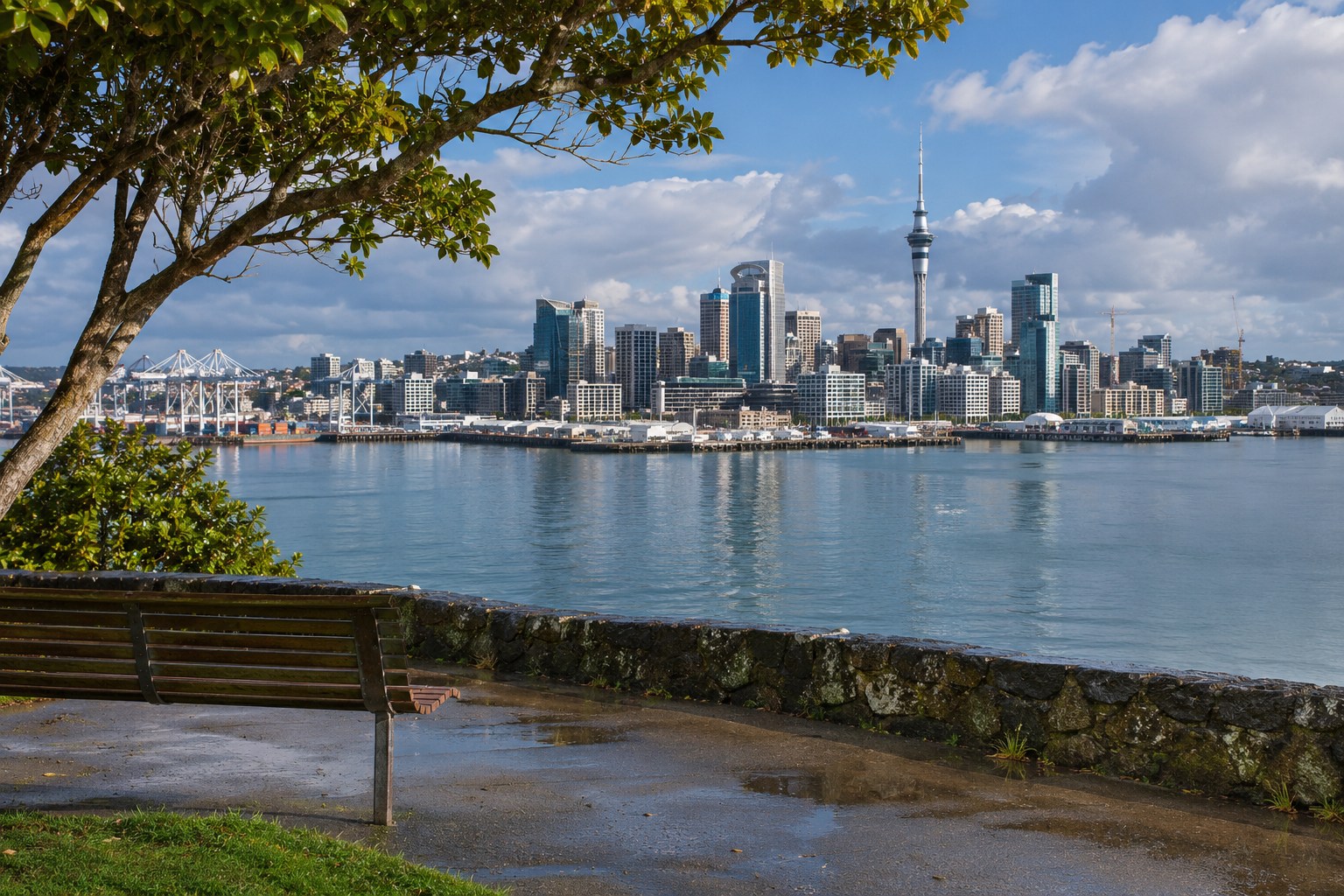
Auckland was New Zealand's fastest-growing city in the year to June 2026. Wellington City recorded the steepest population fall among the country's cities.
Home values fell in both centres in October, despite the population gap. Advertised rental stock also shrank.
Stats NZ's estimates released on 29 October put Auckland at 1,841,200 residents, up 22,700 or 1.2% over the year. Wellington City lost about 1,200 people, a 0.6% decline, leaving 208,300 residents. Across Aotearoa New Zealand, population growth was 0.7%.
Auckland is a single large council area. Wellington City covers only part of the capital's metropolitan region, which also includes Porirua, Lower Hutt, Upper Hutt and the Kāpiti Coast. The city's population decline cannot be applied to the whole Wellington region.
Migration is driving the gap between the two cities
Over the year to June, Auckland gained around 13,000 residents through net international migration and recorded 10,800 more births than deaths. It lost a net 1,100 people to other New Zealand regions. Overseas arrivals more than made up for those domestic departures.
Wellington City recorded 640 more births than deaths. That gain was outweighed by a net internal migration loss of 600 and a net international migration loss of 1,300. The provisional totals are rounded.
Waitematā gained 3,000 people through international migration but lost a net 2,400 through internal moves. Franklin gained 840 from elsewhere in New Zealand.
Māngere-Ōtāhuhu, Papakura and Ōtara-Papatoetoe also grew strongly. Population rose in 18 of Auckland's 21 local board areas.
On 12 November, Stats NZ reported a provisional net gain of 22,600 for the year to September 2026, higher than a year earlier. That national total cannot be apportioned between Auckland and Wellington from the June city estimates; the releases cover different periods.
Wellington's job market adds to the pressure
Wellington relies heavily on central government and professional services. Colliers' Wellington office-market review describes weaker demand for CBD space amid public-sector restructuring and cautious business sentiment. CBD shops and hospitality businesses depend on many of those workers, too.
Infometrics estimates employment among Wellington City residents fell 1.7% in the year to June 2026.
The Ministry of Business, Innovation and Employment's Jobs Online indicators also recorded annual falls in advertised vacancies in Auckland and Wellington in the September quarter, while most other regions saw growth.
National unemployment reached 5.7% in the September 2026 quarter, according to Stats NZ. The Reserve Bank has identified elevated unemployment in both centres. More residents do not necessarily mean more jobs or household spending.
Wellington's migration estimates count moves, not motivations. Public-sector cuts and weaker hiring help explain the economic backdrop, but the figures do not say why each person left.
House prices are falling in both Auckland and Wellington
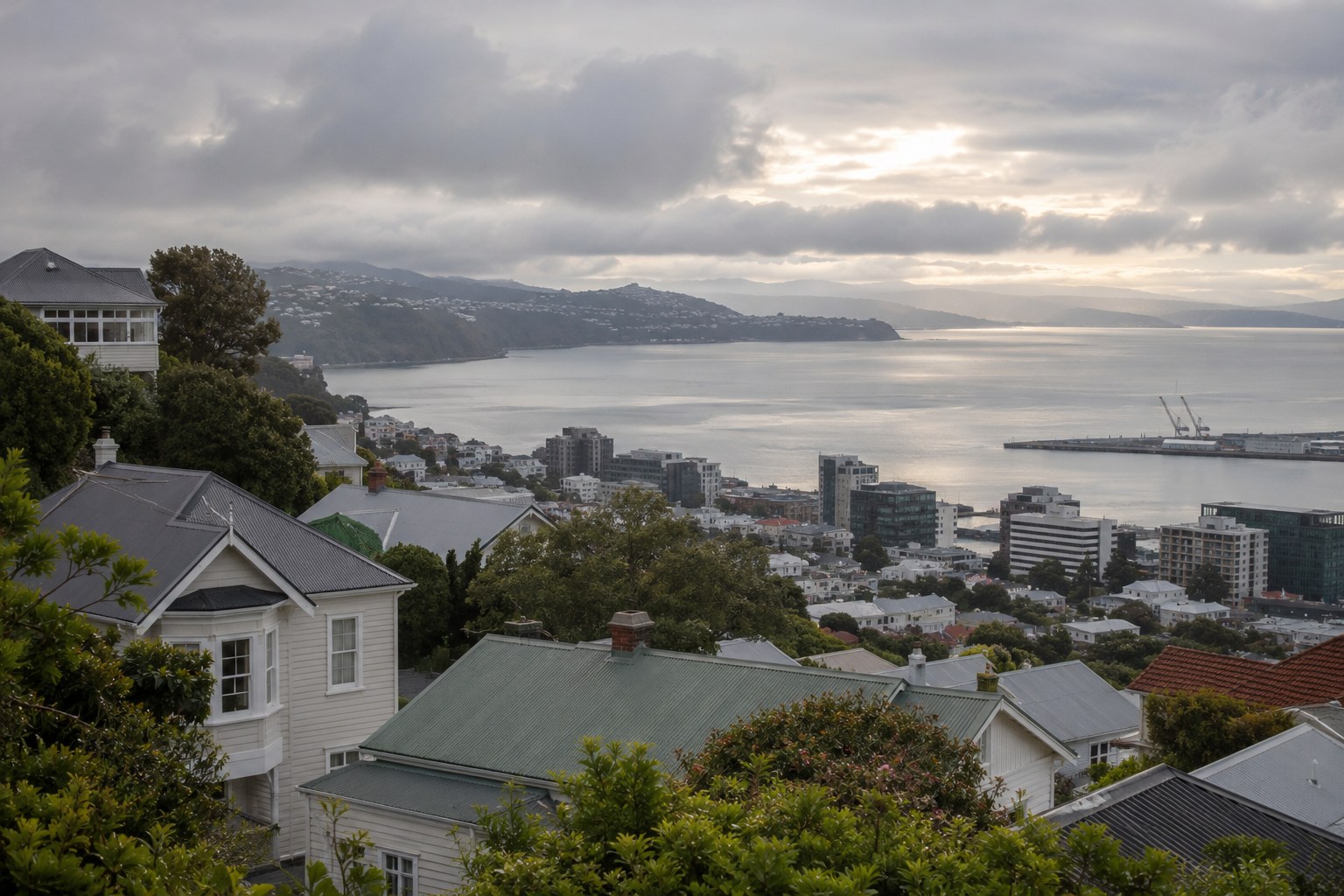
QV's House Price Index recorded a 1.6% drop in Auckland home values and a 1.7% fall in Wellington over the three months to the end of October. Both were among the weaker North Island urban markets, despite Auckland's growing population. Cotality's October Home Value Index found monthly declines too: 0.7% in Tāmaki Makaurau Auckland and 0.9% in Te Whanganui-a-Tara Wellington. QV and Cotality use different measures and reporting periods, so the percentages should not be treated as one continuous price series.
Sales have slowed sharply. The Real Estate Institute of New Zealand (REINZ) figures released on 13 November show 5,840 residential sales nationwide in October, down 23.5% year-on-year.
Auckland's count dropped by about 30%. Wellington recorded its fourth-lowest October sales total in REINZ's 35-year series. Nationwide housing inventory was 11.4% above October 2025.
Buyers face more choice but still have to weigh mortgage costs against job security. The Reserve Bank held the Official Cash Rate at 2.75% on 28 October after earlier increases during 2026. Falling home values do not, by themselves, make a mortgage affordable.
Renters face a different market from home buyers
realestate.co.nz's October rental report recorded 13.0% fewer rental properties advertised in Auckland than a year earlier and 13.2% fewer in Wellington.
Average weekly asking rents rose 1.3% to $692 in Auckland and 1.5% to $643 in Wellington.
Sale inventory and rental advertisements measure different markets. More homes available to buy do not ensure more choice for people seeking a tenancy. The rental figures describe asking rents rather than what existing tenants pay, and the Wellington rental market covers a different area from Wellington City in the population estimates.
In the year to September 2026, Stats NZ recorded 9.4 new dwellings consented per 1,000 residents in Auckland, against 4.4 across the Wellington region and 12.8 in Canterbury. Consents indicate approvals to build, not completed homes.
Auckland's rail link and growth beyond the main centres
The City Rail Link opened to Auckland passengers on 13 September 2026, bringing trains through the city centre.
The project links Te Waihorotiu, Karanga-a-Hape and Maungawhau stations, with Auckland Transport and KiwiRail running the connected network. Its effect on commuting, development and jobs will depend on how the rail service is used over time.
Wellington's CBD needs reliable links to the Hutt Valley, Porirua and Kāpiti Coast while the capital tries to retain residents and employers. Slower population growth does not remove the expense of transport, water networks or resilient buildings.
Christchurch reached 422,400 residents after rising 0.9% in the year to June; Selwyn district in Canterbury grew 2.9%, the fastest rate among territorial authorities. Hamilton reached 193,300. Stats NZ projections suggest Hamilton could overtake Wellington City around the late 2030s, although future migration could shift that date.