

An All Blacks Test can set the dates for a trip; a Saturday club game shows another side of rugby in Aotearoa New Zealand. Cricket takes over summer grounds, while netball, basketball, football and rugby league draw their own crowds. Surf breaks, bike trails and alpine tracks make it possible to join in rather than watch. The useful first question is whether the fixture or the destination comes first.
Choose the sporting experience that fits your plans
An international Test brings ceremony, a larger crowd and greater competition for seats. An NPC or club fixture puts local loyalties closer to the touchline. Neither demands expert knowledge of the rules, though the ticketing and travel arrangements can be quite different.
| What you want | A strong fit | Where and when |
|---|---|---|
| A big international atmosphere | All Blacks or Black Ferns rugby Tests | Selected host cities; fixtures vary by year |
| Fast rugby with regular home games | Super Rugby Pacific or Super Rugby Aupiki | Main centres, chiefly during the first half of the year |
| Regional pride without the Test-match scale | NPC, Farah Palmer Cup or club rugby | Provincial grounds; winter into spring |
| A relaxed summer afternoon | Cricket, especially Super Smash or a domestic one-day match | Hagley Oval, Basin Reserve, Seddon Park and other grounds |
| Football or rugby league with a vocal crowd | Auckland FC, Wellington Phoenix or the Warriors | Auckland and Wellington; check each competition calendar |
| Sport you can do yourself | Surfing, cycling, tramping, golf or skiing | Coast and trails year-round; snow sports mostly June–October |
Why rugby has such a hold on New Zealand
Organised rugby began in Nelson in 1870. The 1905 touring team, known as the Original All Blacks, helped make the black jersey and silver fern familiar far beyond New Zealand. At home, clubs, schools and provincial unions kept the game rooted in their communities. The National Provincial Championship still gives those regional loyalties a stage.
The All Blacks won the men's Rugby World Cup in 1987, 2011 and 2015. The Black Ferns have six Women's Rugby World Cup titles, including the tournament played at home in 2022. Those records sit alongside Māori rugby, school sport and provincial competition. Rugby has an exceptional public profile, but swimming, walking, cycling and other activities are part of everyday life too.
The haka is part of a living culture
A haka expresses Māori identity, mana and collective purpose in settings far beyond sport. The All Blacks perform Ka Mate or Kapa o Pango. Derek Lardelli composed Kapa o Pango for the team; it was first performed in 2005. The Black Ferns perform Ko Ūhia Mai, created by Te Whetu Tipiwai, and the Māori All Blacks perform Te Tīmatanga. Each composition has its own history.
A club match does not automatically include a haka. When one is performed, giving the performers space and attention respects the occasion and the people presenting it. Te Puia in Rotorua presents Māori cultural performances and traditional arts in a setting beyond the rugby ground.
Rugby union, rugby league and sevens are not the same game
Rugby union has 15 players a side and two 40-minute halves. A try earns five points, a conversion adds two, and a penalty or drop goal is worth three. Scrums, lineouts, rucks and mauls decide possession. At a first match, following territory and who has the ball is often easier than interpreting every whistle.
League is played with 13 players a side. The attacking team usually has six tackles to advance before possession changes. The New Zealand Warriors play in Australia's National Rugby League (NRL); the Kiwis and Kiwi Ferns represent New Zealand internationally. Sevens has seven players on each side and shorter matches, leaving space for fast breaks. The All Blacks Sevens and Black Ferns Sevens are New Zealand's leading national teams in that format.
Which rugby competition should you watch?
All Blacks and Black Ferns: international Test rugby
The Bledisloe Cup links the All Blacks and Australia's Wallabies. Tests against South Africa's Springboks, England, Ireland and France bring different rivalries. Men's international calendars change: the Nations Championship began in 2026, when The Rugby Championship was not staged; the latter was scheduled to return in 2027. Host cities vary, so a visiting national team is no guarantee of a match in Auckland.
The Black Ferns have their own Test calendar. Their players come through clubs, provincial teams and professional domestic rugby, with Māori women's rugby part of the wider history. Following the women's game means paying attention to those pathways, not just the national side's results.
Super Rugby Pacific: city rivalries and high-level club rugby
New Zealand has five Super Rugby Pacific franchises: the Blues, Chiefs, Hurricanes, Crusaders and Highlanders. They face sides from Australia, Fiji and elsewhere in the Pacific. Games between New Zealand franchises are local derbies, and the distances between the cities make some matches suitable for a weekend trip. The season usually runs from February into June; finals dates change each year.
Super Rugby offers more home dates than the international calendar. For a weekend trip, check the actual home venue and kick-off time before settling on accommodation. A marquee derby on the fixture list might be taking place in the other team's city.
Super Rugby Aupiki and the Farah Palmer Cup
Super Rugby Aupiki includes the Blues, Chiefs Manawa, Hurricanes and Christchurch-based Matatū, offering a professional pathway towards the Black Ferns. The Farah Palmer Cup is provincial women's rugby, named for former Black Ferns captain Dame Farah Palmer. Watching either competition reveals players and regional rivalries before they reach the Test stage.
NPC, the Ranfurly Shield and grassroots rugby
The National Provincial Championship (NPC) involves 14 provincial unions. Canterbury, Waikato, Wellington, Otago, Hawke's Bay, Taranaki, Tasman, Northland and Manawatū carry strong local identities. A Ranfurly Shield holder defends the trophy at home against eligible challengers, giving some provincial fixtures an extra edge. The Heartland Championship brings representative rugby to smaller towns and rural areas.
At a suburban club on Saturday, volunteers prepare fields and whānau follow matches across the age grades. Conversations beside the touchline show how rugby lives outside the national spotlight.
Where to experience rugby around the country
Auckland: Eden Park and a choice of codes
Eden Park in Auckland's Kingsland hosted the men's Rugby World Cup finals in 1987 and 2011 and remains closely associated with the All Blacks and Blues. Stadium tours can include the players' tunnel and changing rooms when these areas are available. The All Blacks Experience in the SkyCity precinct has team history, an interactive haka presentation and rugby skills activities. Both are options on a day without a fixture.
Go Media Stadium in Penrose hosts the Warriors and Auckland FC. Between it and Eden Park, Tāmaki Makaurau offers rugby union, NRL league and A-League football. Check the specific event's public transport arrangements and entry rules; they do not necessarily carry over from one sport to the next.
Hamilton and the Waikato: Chiefs country
Hamilton's FMG Stadium Waikato hosts the Chiefs, Chiefs Manawa and Waikato rugby. Provincial and Heartland connections extend through Bay of Plenty, Taranaki, Counties Manukau, King Country and Thames Valley. Seddon Park is the city's cricket option in summer. To the west, Raglan offers surfing between match days.
Wellington: rugby, football and cricket close together
Wellington's waterfront Hnry Stadium was called Sky Stadium until March 2026 and is still nicknamed the Cake Tin. The Hurricanes and Wellington Phoenix play there. The Basin Reserve is nearby, making rugby, football and cricket easy to combine with the compact city centre and harbour walks.
Christchurch and Canterbury: a new stadium and established traditions
The Crusaders represent Canterbury in Super Rugby. Christchurch's roofed One New Zealand Stadium (Te Kaha) opened in the central city in 2026 for rugby and other major events. Hagley Oval hosts summer cricket, while Christchurch Adventure Park and the Port Hills provide cycling and outdoor options beyond the stadium.
Dunedin, Otago and provincial towns
Dunedin's Forsyth Barr Stadium combines a roof with a natural-grass pitch and hosts Highlanders rugby. In provincial centres, McLean Park in Napier is linked to the Hawke's Bay Magpies and Yarrow Stadium in New Plymouth to the Taranaki Bulls. Fixtures involving Southland, Tasman and Northland show why a rugby trip need not follow the five Super Rugby cities.
The New Zealand Rugby Museum is in Palmerston North, not Auckland or Wellington. Alongside historic All Blacks material, its interactive Have-a-Go area lets visitors try aspects of the game. Manawatū's provincial rugby heritage gives the collection a local setting.
Other sports that shape New Zealand's calendar
Cricket: the summer counterpart to winter rugby
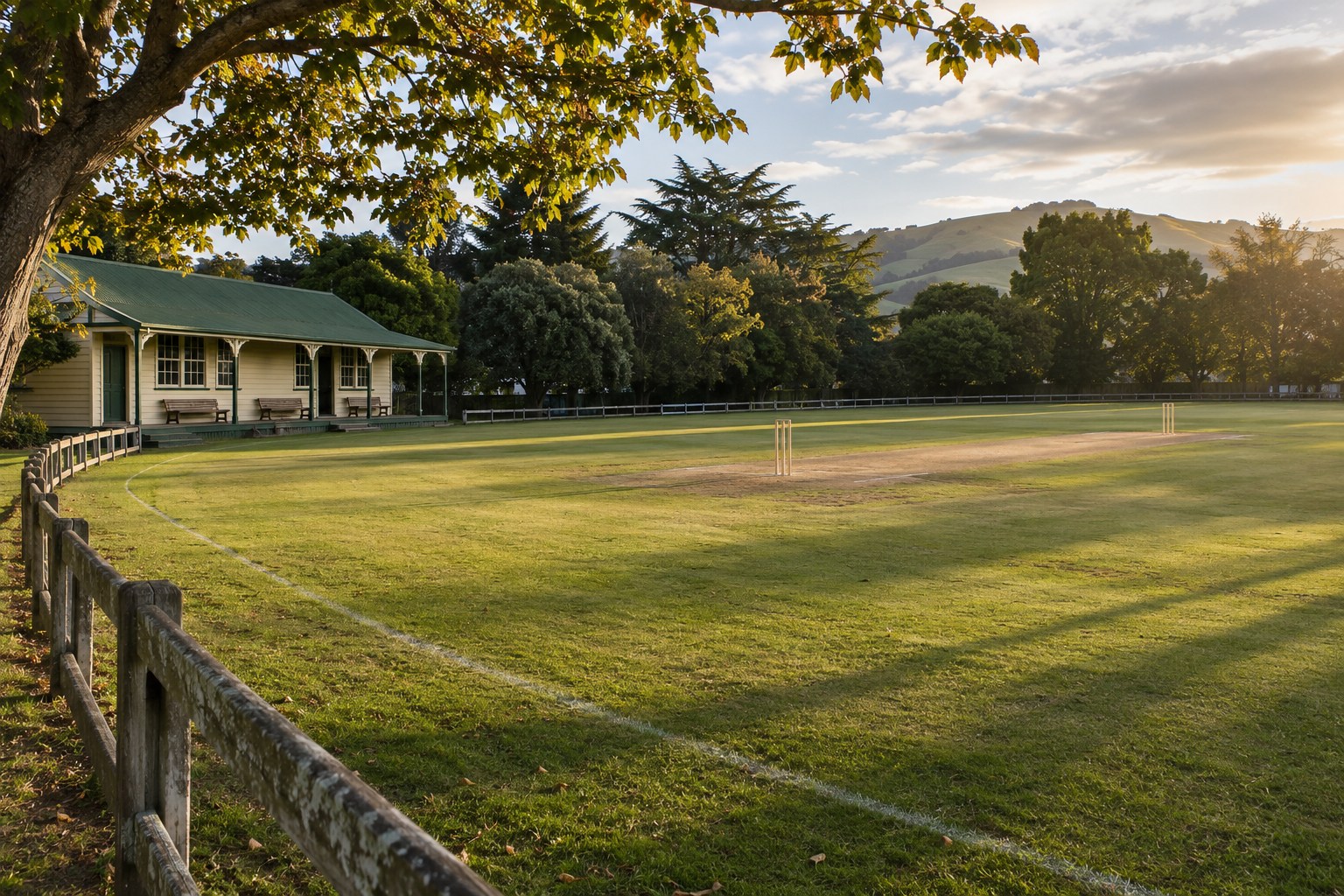
Summer belongs to cricket. The BLACKCAPS and WHITE FERNS are New Zealand's national sides, and the domestic Super Smash has men's and women's Twenty20 matches. A T20 innings is limited to 20 overs, so the game suits an afternoon or evening. One-day cricket generally uses 50 overs per side. A Test can last five days, with a very different pace.
Wellington's Basin Reserve, Christchurch's Hagley Oval, Bay Oval in Mount Maunganui and Hamilton's Seddon Park are established venues. The Ford Trophy is the men's one-day competition; the Hallyburton Johnstone Shield is the women's equivalent; the Plunket Shield is men's four-day first-class cricket. Domestic fixtures can be easier to attend than internationals, and many offer free entry.
Netball, football and basketball
Netball runs from schools and clubs to the Silver Ferns national team. The ANZ Premiership includes the Northern Mystics, Central Pulse, Mainland Tactix, Waikato Bay of Plenty Magic, Northern Stars and Southern Steel. Its indoor venues offer a wet-weather alternative to outdoor sport, and the quick changes of possession make matches lively even for first-time spectators.
The All Whites and Football Ferns represent New Zealand in association football. Auckland FC and Wellington Phoenix meet in the A-League, a trans-Tasman competition played largely in the warmer months. The New Zealand Breakers compete in Australia's NBL, while the domestic New Zealand National Basketball League has its own teams and season. The Tall Blacks and Tall Ferns are the national basketball sides.
The Black Sticks represent New Zealand in field hockey, a sport also played through schools and clubs. For participation without full rugby contact, touch rugby and social football offer regular local options.
Tennis, golf, running and endurance events
Auckland hosts the ASB Classic tennis tournament in January. Golf choices range from community courses to Te Arai Links, Cape Kidnappers in Hawke's Bay and Jack's Point near Queenstown. The New Zealand Open is associated with Queenstown and Millbrook Resort. Green fees, visitor access and club hire are worth checking before committing to a round.
The Auckland Marathon, Rotorua Marathon, Tarawera Ultra-Trail and IRONMAN New Zealand in Taupō bring runners and triathletes to very different routes. Even people watching from the roadside should check closures and accommodation demand around race weekends.
Take part: the outdoors is part of the sporting culture
Mountain biking and cycling
Rotorua's Whakarewarewa Forest, or the Redwoods, has mountain-bike trails ranging from gentle rides to technical singletrack. Queenstown offers lift-assisted bike parks and longer alpine or lakeside routes. New Zealand's Great Rides suit multi-day cycling at a different pace. Trail grade and current conditions matter more than a destination's reputation; downhill tracks are not beginner shortcuts.
Surfing, sailing and water sports
Raglan's left-hand point breaks include Manu Bay, Whale Bay and Indicators. For a learner, a lesson at a suitable beach such as Ngarunui makes more sense than tackling those advanced waves. Tairāwhiti Gisborne has spots including Waikanae and Makorori. Piha, west of Auckland, is exposed to strong currents; use patrolled swimming areas and follow surf lifesaving advice.
The Waitematā Harbour and Hauraki Gulf make Auckland a base for sailing and other water sports. Lake Karāpiro in Waikato is linked to rowing and waka ama, the Māori outrigger-canoe tradition. Guided kayaking and paddling offer options for visitors who are not competing.
Tramping, snow sports and adventure activities
Tramping means hiking in New Zealand. The Tongariro Alpine Crossing is a demanding day walk; the Tongariro Northern Circuit is a separate multi-day route. Snow, ice, strong winds and avalanche terrain make the volcanic plateau hazardous in winter. Check Department of Conservation alerts, transport and track conditions before leaving. In the South Island, the Routeburn and Abel Tasman tracks have their own booking requirements and seasonal considerations.
Snow sports generally run from mid-June to October, subject to weather. Coronet Peak and The Remarkables serve Queenstown; Cardrona and Treble Cone are near Wānaka; Mt Hutt is in Canterbury. Roads, lifts and lessons are weather-dependent, so an extra day helps if conditions close the mountain. Queenstown also offers bungy jumping and other adventure activities outside the ski fields.
When to plan a sports-focused trip
New Zealand's seasons run opposite to those in the Northern Hemisphere. Most cricket falls in summer; rugby and snow sports can overlap in winter. Individual fixtures change each year, so the broad seasonal pattern is more useful than old event dates.
| Period | Main sporting opportunities | A practical pairing |
|---|---|---|
| December–February | International and domestic cricket, summer football, tennis, golf, surfing | Cricket at Hagley Oval and cycling around Christchurch |
| March–May | Super Rugby Pacific, A-League football, NRL rugby league, netball and running events | An Auckland game followed by a west-coast beach day |
| June–August | Rugby Tests when scheduled, Super Rugby finals, provincial rugby, winter indoor sport, skiing | Highlanders rugby in Dunedin and a South Island snow trip |
| September–November | NPC and Farah Palmer Cup, selected internationals, trail running, returning cricket season | A Waikato match and Rotorua mountain biking |
Match-day details people often discover too late
- Competition level determines the atmosphere. A Test has ceremony and demand for seats; a provincial or club match is more informal and often better for seeing local sporting life up close.
- Not every fixture includes a haka. The haka is associated with particular national teams and cultural settings, not a guaranteed feature of every rugby game.
- Venue names change. Wellington's Hnry Stadium is the former Sky Stadium; Christchurch's One New Zealand Stadium is also known as Te Kaha. Search using both names when checking older travel information.
- Tickets and transport have separate rules. Entry gates, bag restrictions, reserved seating and public-transport inclusions vary by event. An official fixture page and the venue's entry information are more reliable than an old match guide.
- Weather affects both matches and outdoor plans. Wind and rain are part of open-air sport; roofed stadiums do not remove the need for warm layers on the journey. Surf, alpine and trail conditions demand a fresh safety check on the day.
- The easiest match is not always the biggest one. A Super Rugby, Aupiki, NPC or domestic cricket fixture may fit travel dates, budgets and family needs better than an international event.
Three ways to combine sport with a New Zealand journey
Auckland and Waikato: two codes, one coast
Auckland offers the Blues at Eden Park, the Warriors at Go Media Stadium and Auckland FC football. The New Zealand Rugby Museum is in Palmerston North, too far for a casual Auckland stop; it fits a longer North Island drive. A shorter extension reaches Hamilton for Chiefs rugby or Seddon Park cricket, with Raglan's surf beaches to the west.
Wellington and the lower North Island: local rivalries and heritage
In Wellington, Hnry Stadium and the Basin Reserve bring rugby, football and cricket close to the city centre. Driving north through Manawatū allows a stop at the Rugby Museum in Palmerston North and, when dates work, a provincial fixture. This route favours supporters curious about rugby beyond the international stage.
Canterbury and Otago: rugby under a roof, then the mountains
Christchurch combines Crusaders rugby at One New Zealand Stadium, Hagley Oval cricket and rides around the Port Hills. Dunedin adds Highlanders rugby under the Forsyth Barr Stadium roof. Farther inland, Queenstown and Wānaka offer alpine cycling, golf, tramping and winter snow sports. The match date anchors the journey; weather decides which outdoor days are realistic.
Official draws are listed by New Zealand Rugby, All Blacks and Black Ferns fixtures and New Zealand Cricket; each stadium publishes its own entry rules. The Department of Conservation maintains walking-track information and alerts. A rugby ticket fixes one date, but surf, trails and snow need a fresh conditions check.