
Travel in New Zealand is easier to plan once you choose the region and the pace. Three nights based in Auckland are nothing like ten days crossing the Southern Alps. Whether the priority is walking, cycling, rugby or time on the water, allow enough room in the schedule to enjoy it rather than racing to the next town.
Aotearoa's volcanic landscapes, surf beaches, native forest, alpine lakes and historic towns can make a varied holiday. The catch is the distance between them. Mountain passes, winding coastal roads, Cook Strait ferries and sudden weather changes can derail an itinerary built around a new overnight stop every day.
How much of New Zealand fits into your holiday?
Count the full days left after reaching the region. Even a short flight, collecting a vehicle and driving to a trailhead can use up most of an arrival day. For three nights, pick one base. With two weeks, explore one island properly; three weeks gives both islands more breathing room.
| Time available | A workable focus | What you gain | What to leave out |
|---|---|---|---|
| 3–5 days | One base such as Rotorua, Northland, Nelson or Queenstown | Day walks, cycling, beaches or a sporting event without repeated packing | A cross-island road trip |
| 7–10 days | One region in depth or a compact North Island route | Two or three contrasting landscapes, with a spare weather day | Trying to include every headline attraction |
| 10–14 days | A South Island loop or a North Island journey | Multi-day tramping, a Great Ride or a slower family road trip | Both islands plus several major detours |
| 18–21+ days | Both islands using a ferry or domestic flight | Time for cultural stops, outdoor sports and recovery days | Backtracking to fit distant side trips |
An alpine walk, ski day, kayak trip or scenic flight can be cancelled by weather. Book scarce activities first; leave some room around them.
North Island or South Island?
North Island: geothermal landscapes, Māori culture and coastal sport
Te Ika-a-Māui, the North Island, is ideal for combining beaches with Māori cultural experiences and shorter intercity journeys. Auckland has Hauraki Gulf ferries, Waiheke Island and the volcanic walking route on Rangitoto Island. Farther north, the Bay of Islands, Waitangi Treaty Grounds, Waipoua Forest and Te Rerenga Wairua/Cape Reinga need several days. A single day trip would be mostly driving.
The Waitomo caves in Waikato offer glowworm visits, caving and black-water rafting; Matamata is the starting point for the Hobbiton Movie Set. Rotorua has geothermal areas, hot pools, Māori-led experiences at Te Puia and trails in Whakarewarewa Forest. At Taupō, Huka Falls and the lake sit close to the volcanic plateau. Farther south, Tongariro National Park draws alpine trampers, and Mount Ruapehu's Whakapapa and Tūroa ski areas operate in winter when conditions allow.
Raglan is a surf stop; Tauranga and Mount Maunganui/Mauao are good for a coastal break. Around New Plymouth, Taranaki Maunga and Te Papa-Kura-o-Taranaki (formerly Egmont National Park) offer walks in a different volcanic landscape. Hawke's Bay pairs Napier's Art Deco architecture with cycle trails and vineyards. Wellington has Te Papa Tongarewa, Zealandia and the harbour, and is the North Island departure point for Cook Strait ferries.
South Island: mountains, fiords, cycling and winter sports
Te Waipounamu, the South Island, has the stronger concentration of alpine routes and long outdoor journeys. Nelson–Tasman is the access region for walking and sea kayaking in Abel Tasman National Park, often from Mārahau or Kaiteriteri. The Queen Charlotte Track winds through the Marlborough Sounds. Kaikōura is a different kind of coastal stop, with whale watching and other marine wildlife against a mountain backdrop.
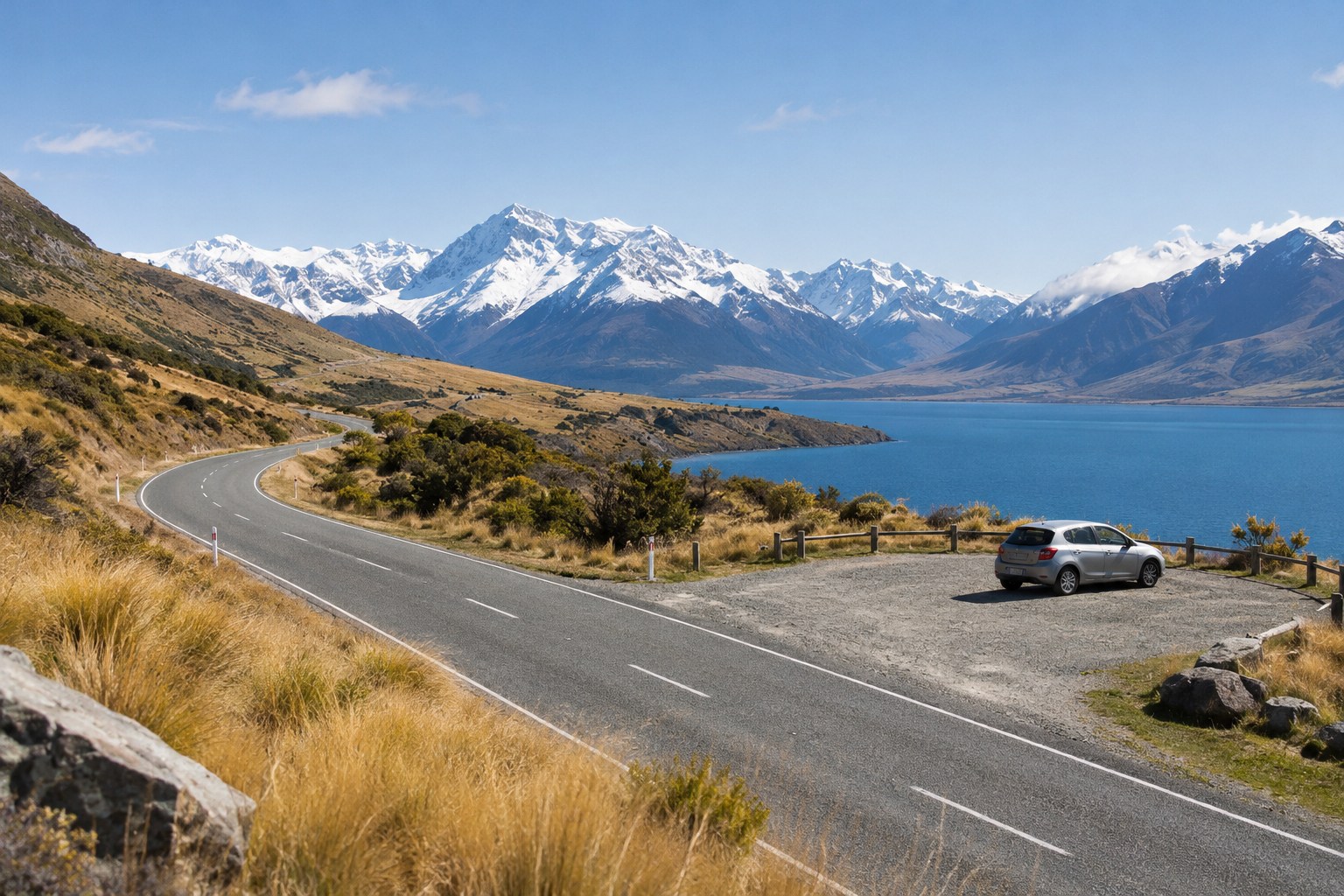
From Christchurch, Banks Peninsula and Akaroa make a coastal side trip; Arthur's Pass leads into mountain country. Inland Canterbury takes you past Lake Tekapo/Takapō and Lake Pūkaki to Aoraki/Mount Cook National Park. The Hooker Valley Track and Tasman Glacier viewpoints are valley options, with the Aoraki Mackenzie International Dark Sky Reserve overhead after sunset. Mueller Hut is a harder alpine undertaking, not a substitute for an easy valley walk.
Wānaka, Queenstown and Arrowtown are bases for mountain biking, skiing, climbing, golf, lake trips and bungy jumping. Te Anau is closer than Queenstown to Fiordland National Park, Milford Sound/Piopiotahi and access for the Milford, Kepler and Routeburn tracks. Doubtful Sound/Patea involves more travel arrangements. It is also a more remote fiord.
The West Coast takes time. Punakaiki's Pancake Rocks, Hokitika Gorge, Franz Josef and Fox Glacier lie along roads where heavy rain can change plans. Dunedin and the Otago Peninsula have albatross, penguins and coastal wildlife; Ōamaru adds Victorian heritage and little blue penguin viewing. Rakiura/Stewart Island, reached by ferry from Bluff or by air from Invercargill, is a destination for native forest, birdlife and the chance of seeing a wild kiwi.
For surf, geothermal country and Māori cultural sites, head north. For fiords, high mountains, long cycle trails and snow sports, go south. Both islands have accessible short walks.
When to travel: match the season to the activity
The Southern Hemisphere seasons are a starting point, not a forecast. Northland may be mild while the Southern Alps are bitterly cold. Rain on the West Coast can arrive while Central Otago stays dry. Conditions that suit a coastal walk say little about the safety of an alpine route.
| Season | Good fit | Trade-off |
|---|---|---|
| Summer (December–February) | Beaches, Abel Tasman kayaking, road trips, longer daylight hours and many Great Walks | Busy school-holiday periods, higher accommodation demand and exposed tracks in strong sun |
| Autumn (March–May) | Central Otago colours, cycling, food and wine, moderate-temperature day walks | Shortening daylight and increasing alpine cold later in the season |
| Winter (June–August) | Skiing and snowboarding around Ruapehu, Canterbury, Queenstown and Wānaka; city breaks and hot pools | Ice, snow chains or traction requirements on some roads, and technical conditions on alpine tracks |
| Spring (September–November) | Gardens, waterfalls, wildlife, cycling and lower-pressure itineraries away from peak holiday dates | Changeable weather, strong winds and lingering snow at altitude |
Ski fields commonly operate from mid-June to mid-October, but snow and wind determine opening dates. At the coast, tides, water temperature, swell and lifeguard patrols are the real checks. For tramping, use the forecast for the track and its altitude, not the nearest town.
Walking, cycling and adventure sports
Tramping: from short forest walks to Great Walks
New Zealand has 13 national parks. The Department of Conservation (DOC) manages extensive tracks, huts and campsites, but conditions vary sharply. A short forest walk and an exposed alpine route may start in the same district yet demand entirely different skills. Check DOC's track grade and alerts alongside Plan My Walk; photos alone cannot establish difficulty.
DOC's 11 Great Walks include the Abel Tasman Coast Track, Heaphy Track, Paparoa Track, Lake Waikaremoana Track and Rakiura Track. Farther south are the Milford Track, Routeburn Track, Kepler Track and Hump Ridge Track. The Tongariro Northern Circuit crosses volcanic country; the Whanganui Journey is a multi-day canoe trip rather than a walk. Hut and campsite rules vary by route, and Hump Ridge Track bookings are managed separately.
The Tongariro Alpine Crossing runs 20.2 km one way and typically takes seven to eight hours in the main walking season. The exposed terrain makes it a serious day out, even in summer. From May to October, snow, ice and avalanche hazards call for specialist alpine skills; travellers without them should use a qualified guide. A track booking is recommended and is required when using a shuttle or guided service. If conditions turn, a lower-level walk such as Taranaki Falls near National Park Village is a safer alternative.
At Aoraki/Mount Cook, the Hooker Valley Track leads towards views of Aoraki, while Mueller Hut involves a much harder climb. Flooding and erosion can change access. DOC opened a replacement Hooker River swing bridge in July 2026, but the latest track notice still takes precedence over old route descriptions.
Cycling: choose by grade, not just scenery
Ngā Haerenga Great Rides range from easy rail trails to isolated mountain-bike routes. The mostly flat Otago Central Rail Trail runs between Clyde and Middlemarch, with Alexandra and Omakau among its stopping points. The Hauraki Rail Trail, linking Thames, Paeroa and Waihī across the Waikato–Coromandel area, is another manageable option for families or riders returning to cycling.
For longer rides, there is the Alps 2 Ocean Cycle Trail between the Aoraki/Mount Cook region and Ōamaru, the West Coast Wilderness Trail, Hawke's Bay Trails, Tasman's Great Taste Trail and the Remutaka Cycle Trail. The Timber Trail, Old Ghost Road, Queen Charlotte Track and some sections of the Lake Dunstan Trail are more technical or remote. Rotorua's Whakarewarewa Forest, Taupō's Great Lake Trails and the Queenstown Trail offer further mountain-bike and e-bike possibilities.
Track grade matters more than the brochure photo. Check surface, exposure, distances between services and e-bike access: a grade-one rail trail is not remote singletrack. Shuttles and luggage transfers can make a point-to-point ride workable without asking the whole group to cycle every kilometre.
Skiing, snowboarding and alpine conditions
Whakapapa and Tūroa are the North Island's main ski areas on Mount Ruapehu. In the South Island, Mt Hutt is near Methven, Coronet Peak and The Remarkables are near Queenstown, and Cardrona and Treble Cone are near Wānaka. Compare the day's snow report, terrain, lessons and access road. Chains may be required; high winds can stop lifts even when it is calm in town.
A groomed ski slope is not the backcountry. Snowshoeing, ski touring and mountaineering demand avalanche information, route knowledge and rescue equipment. A resort snow report cannot establish whether an alpine trail is safe.
Surfing, paddling, diving and wildlife on the water
Experienced surfers head to Raglan breaks such as Manu Bay. Piha, west of Auckland, can be powerful, with dangerous rips. Mount Maunganui and the Coromandel offer other beaches. For swimming, use the red-and-yellow flags when lifeguards are on duty; surfers still need to assess swell, currents and local hazards.
Abel Tasman's sheltered bays suit sea kayaking; the Poor Knights Islands off Northland are a diving destination. The Whanganui River has a multi-day canoe route. People also paddle or boat on the Hauraki Gulf, Lake Taupō and the Wānaka lakes when conditions allow. Under New Zealand maritime rules in effect from October 2026, people on recreational craft six metres or shorter must wear lifejackets while the craft is under way, subject to specific exceptions. Local bylaws and marine forecasts still apply.
Adrenaline sports, rugby, golf and fishing
Queenstown has the Kawarau Bridge bungy jump, Shotover River jet boating, skydiving, rafting and guided climbing. Taupō and Wānaka also have skydiving operators; Waitomo has underground adventures. Before booking, look beyond the promotional video to the operator's safety requirements, weather policy, age limits and medical restrictions. A guided nature walk or lake cruise is an alternative when a group has mixed abilities.
A rugby match can be the reason for a city break. Grounds include Eden Park in Auckland, Sky Stadium in Wellington and Forsyth Barr Stadium in Dunedin; check fixtures against the competition calendar. Golf options include Jack's Point near Queenstown and coastal courses in Hawke's Bay. For trout or salmon, licences vary: Fish & Game NZ covers most freshwater fisheries, while DOC manages the separate Taupō fishery. Check the rules and season for the water you intend to fish.
Itinerary ideas that avoid unnecessary backtracking
Seven days on the North Island: Auckland to Wellington
- Day 1 — Auckland: explore the waterfront, take a Hauraki Gulf ferry or walk on Maungawhau/Mount Eden.
- Days 2–3 — Waitomo and Rotorua: combine a cave visit with geothermal sights, Māori cultural experiences or mountain biking. Matamata is an optional film-location detour.
- Day 4 — Taupō: allow time for Huka Falls, the lake or a local cycle ride.
- Day 5 — Tongariro region: make the Alpine Crossing a full-day option only with suitable conditions, fitness and logistics. Keep an easier walk available.
- Days 6–7 — Wellington: travel south, then leave a full day for Te Papa, Zealandia or the waterfront before departure.
Northland, the Coromandel Peninsula and Taranaki are too far off this route to squeeze into a week. Families may prefer to spend all seven days around Rotorua and Taupō. If the Tongariro Alpine Crossing is the main goal, add a second night nearby to give the weather a chance to settle.
Ten days on the South Island: Christchurch to Fiordland
- Days 1–2 — Christchurch and Canterbury: settle in, explore the city or use a day for Akaroa and Banks Peninsula.
- Days 3–4 — Lake Tekapo/Takapō and Aoraki/Mount Cook: combine lake scenery, a suitable day walk and dark-sky viewing. Weather may change the order.
- Days 5–6 — Wānaka: choose one substantial hike, a lake day or a bike ride rather than trying all three.
- Days 7–8 — Queenstown: reserve time for Arrowtown, the Kawarau Gorge, an adventure activity or golf.
- Days 9–10 — Te Anau and Milford Sound/Piopiotahi: use Te Anau as a base for the Milford Road and a fiord cruise, then return towards the departure airport with enough travel time.
The West Coast glaciers, Abel Tasman and Kaikōura require more days or cuts elsewhere. Winter road closures can alter even this shorter route.
Three weeks across both islands
A three-week one-way journey might run from Auckland through Waitomo, Rotorua, Taupō and Tongariro to Wellington, then across Cook Strait to Picton. Continue through Marlborough, Nelson–Tasman or Kaikōura towards Christchurch. From Canterbury, travel via Lake Tekapo/Takapō and Aoraki/Mount Cook to Wānaka, Queenstown and Fiordland. The West Coast is an alternative southbound corridor, not a quick extra loop.
Allow more than one night for a Great Walk, multi-day cycle trail or guided river trip. A spare day gives bad weather somewhere to go. An open-jaw flight—into one city and out of another—avoids a long return drive.
Getting around: car, campervan, ferry, flight or train
Self-drive is useful for trailheads and smaller towns. Traffic keeps left in New Zealand, and NZ Transport Agency Waka Kotahi warns that narrow, steep or winding roads take longer than maps suggest. Allow extra time for Haast Pass, Arthur's Pass and the Milford Road, and check NZTA's Journey Planner. Snow, frost, chain requirements and road closures can change winter plans.
Cook Strait ferries run between Wellington and Picton with operators including Interislander and Bluebridge. The crossing takes about three and a half hours at sea, but check-in, loading and onward driving make it a substantial travel day. For a short holiday covering both islands, flying and collecting a separate hire car may save time.
Buses and trains are useful between connected centres. InterCity buses reach many towns, though rural trailheads often need a shuttle. The Northern Explorer, Coastal Pacific and TranzAlpine are scenic rail journeys, not a complete regional transport network. Domestic flights linking Auckland, Wellington, Christchurch and Queenstown shorten long transfers; smaller destinations rely on regional air and ferry services.
Arriving from overseas: NZeTA and visa requirements depend on citizenship and residence status. Everyone entering New Zealand, including returning citizens and residents, must complete the New Zealand Traveller Declaration. Clean used tramping boots, tents and fishing gear before travelling, and declare items that could pose a biosecurity risk. Immigration New Zealand and Biosecurity New Zealand set out the current requirements.
Campervans provide a bed as well as transport, but not unrestricted parking. Freedom camping is banned or limited at many beaches, reserves and DOC sites; DOC publishes site-specific restrictions. A vehicle needs valid green-warrant self-containment certification wherever the rules require it. That certification does not override a local ban. Holiday parks and designated DOC campsites are more predictable; check council rules for the exact site.
Accommodation, budgeting and busy periods
Accommodation ranges from holiday parks and motels to hostels, serviced apartments, bed-and-breakfasts and lodges. DOC huts and campsites have their own booking and equipment rules. Staying near a trailhead at Te Anau, National Park Village, Mārahau or Aoraki/Mount Cook Village can save an early-morning drive and make a change of plan easier.
Budget in New Zealand dollars (NZD). Start with accommodation, hire-car insurance, one-way fees, fuel, ferry or flight fares and paid adventure activities; these can outweigh daily food spending. Ski lessons, lift passes, equipment hire, guided glacier trips and scenic flights deserve separate allowances. Groceries, simple meals and free day walks help keep variable costs under control.
Christmas, January school holidays, Easter, long weekends and major sporting events bring busy accommodation periods. Compare campervan fuel, campsite fees and access restrictions with a small car plus a motel or holiday-park cabin. Groups may spend less by staying several nights in one place.
Māori culture, local food and wildlife
Aotearoa's place names carry local histories. At the Waitangi Treaty Grounds, the signing of Te Tiriti o Waitangi in 1840 is central to the story. Te Papa Tongarewa in Wellington, Māori-led experiences in Rotorua and local guides elsewhere connect visitors with the perspectives of the area's iwi and hapū. Mana whenua refers to customary authority and relationships with a place; kaitiakitanga concerns guardianship, and manaakitanga care and hospitality.
Respect local tikanga at marae and other cultural sites, including guidance on photography. A rāhui can restrict access to protect a place, resource or community. Tongariro's volcanic peaks and waters are significant to local iwi. Being allowed on a track does not mean every lake or summit is open to visitors.
Regional food fits naturally into a road trip. Northland and the Coromandel have coastal seafood traditions; Rotorua is known for hāngī. Marlborough has Sauvignon Blanc, Hawke's Bay and Martinborough have vineyards, and Central Otago is associated with Pinot Noir and stone fruit. Local bakeries, farmers' markets and fish and chips by the sea are good stops between bigger activities.
Keep your distance from wildlife. Kaikōura has whales and seals; the Otago Peninsula has seabirds and penguins, while Rakiura and Ulva Island are valued for native birds. Tūī, kererū, pīwakawaka/fantails and kea live in suitable habitats, but there is no guarantee of seeing them. Use licensed marine-mammal operators, never feed wild birds and leave nesting animals undisturbed.
Safety checks that can change a travel plan
- Before a tramp: read the current DOC track notice, a location-specific MetService forecast and any New Zealand Avalanche Advisory or GeoNet volcanic alerts relevant to the route. Carry waterproof layers, sun protection, food, water and navigation suitable for the terrain; tell a trusted person your intended return time. A personal locator beacon is valuable in remote areas without mobile coverage.
- Before a drive: check NZTA road incidents and local road updates, especially on the West Coast, mountain passes and the Milford Road. Allow breaks and avoid pushing on through fatigue or worsening weather.
- Before entering water: assess tides, swell, river flow and temperature. Swim between the flags where lifeguards patrol, wear the required lifejacket when boating, and do not treat calm-looking water as evidence of a safe crossing.
- Before booking an adventure: check the operator's safety information, age or weight limits, cancellation terms and the realistic physical demands of the activity. Have a land-based alternative when wind or weather stops operations.
- Before using a campsite or trail: respect closures, private land, biosecurity requirements and local waste rules. Clean footwear and equipment to protect vulnerable forests and waterways, and pack insect repellent for sandfly-prone areas such as parts of Fiordland and the West Coast; follow the Tiaki Promise to leave places in good condition.
New Zealand's emergency number is 111. In remote country, rescue may take hours; good preparation still matters.
Common planning questions
Is two weeks enough for both islands?
Yes, but ferries, flights and road travel cut into time outdoors. If you have a Great Walk, several ski days or young children to allow for, one island offers a less rushed holiday.
Can you travel around New Zealand without hiring a car?
Yes. InterCity buses, ferries, domestic flights and organised trips connect major destinations. Remote beaches and trailheads may need a shuttle; fewer bases make the journey easier.
Do all Great Walks require bookings?
Bookings differ by Great Walk, hut, campsite and season; popular summer places can fill well ahead. The Tongariro Alpine Crossing is a day hike with separate booking and shuttle arrangements. The Whanganui Journey is a paddling route. For each trip, use the current DOC Great Walks information.
Is a four-wheel drive necessary?
No, not on sealed main roads. Some gravel tracks to trailheads are excluded by rental contracts. Four-wheel drive cannot overcome snow, flooding or closed roads.
Which experiences suit a mixed-age or mixed-fitness group?
Rotorua's geothermal attractions, Auckland's islands, lakefront outings in Taupō and Wānaka, short rail-trail sections, museums, wildlife cruises and coastal walks work for groups with different interests and fitness levels. Access varies by track, boat and attraction, so check individual facilities before setting off.
What needs checking immediately before departure?
Check road closures, track alerts, mountain and marine forecasts, ferry services, ski-field reports and temporary access restrictions on the day you travel.